
FP&A Modeling
One Place for Your Data. One Model to Power Your Plans.
Structure your financial data and bring your planning logic together in Limelight. Your accounts, business drivers, assumptions, and calculations form one connected foundation for every budget, forecast, and report—with finance in control.
One Model. The Engine Behind Your FP&A.
Move the data, structure, and planning logic behind your spreadsheet tabs into one connected model. Give finance a foundation for every budget, forecast, report, and analysis.
Structure your data
Bring accounts, departments, entities, and periods into a model that reflects how your business operates.
Define your planning logic
Use it Across FP&A
Work from the same model as your team builds budgets, updates forecasts, and reviews performance.
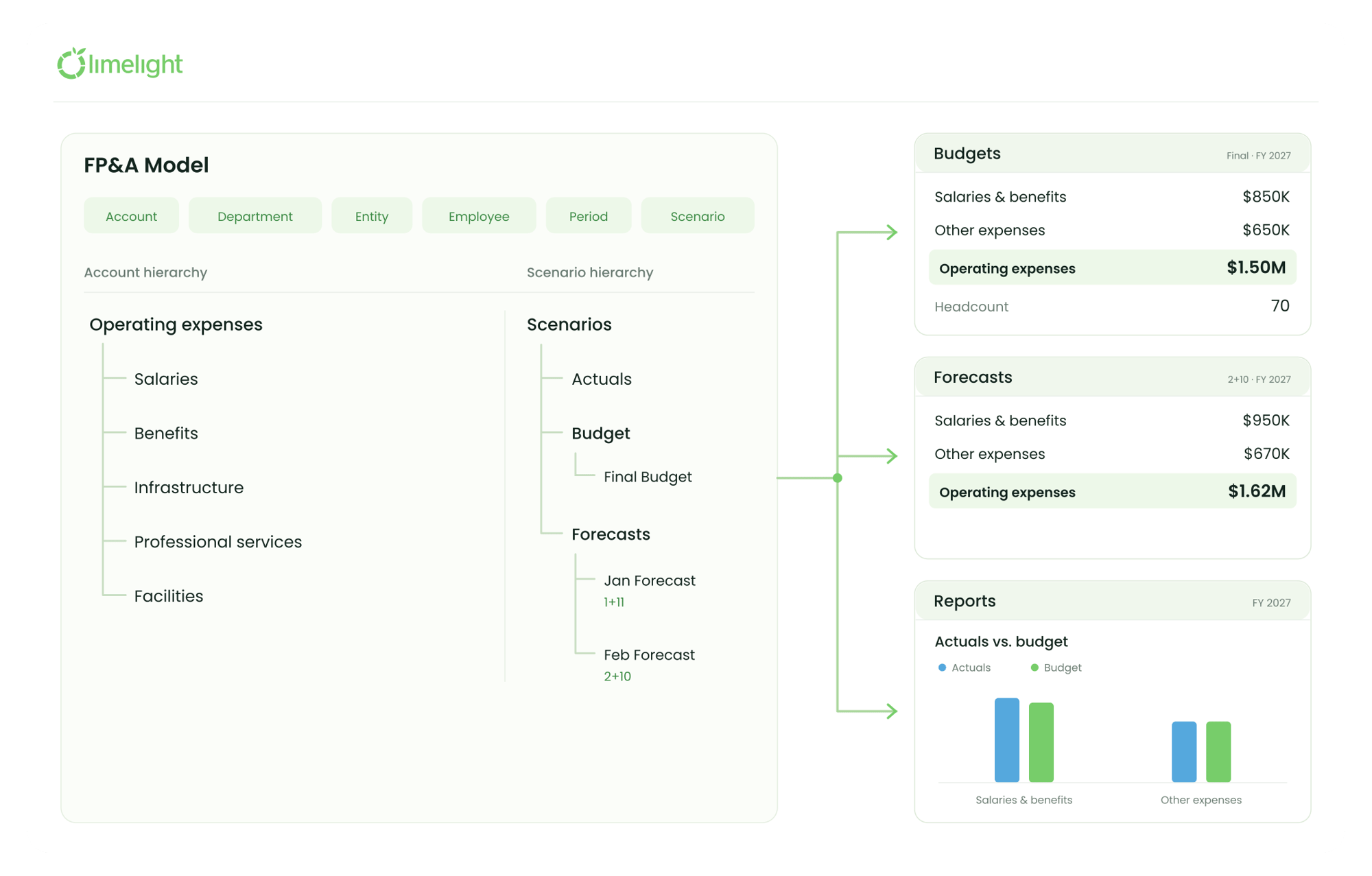
Accounts, Hierarchies & Rollups
Group accounts into the planning and reporting lines leadership needs, with rollups for departments, entities, and other parts of the business.
- Organize accounts into revenue, expense, and KPI groupings
- Build hierarchies around how your business plans and reports
- Use those structures across budgets, forecasts, and reports
Business Drivers & Calculations
Put the logic behind your plans into the model. Connect growth rates, hiring assumptions, and salary increases to financial results, so finance can understand how a change affects the outlook.
- Define assumptions and calculations in one connected model
- Link revenue, salary, and spending drivers to the financial plan
- Change an input and see the effect on connected plans and reports
Dimensions & Reporting Views
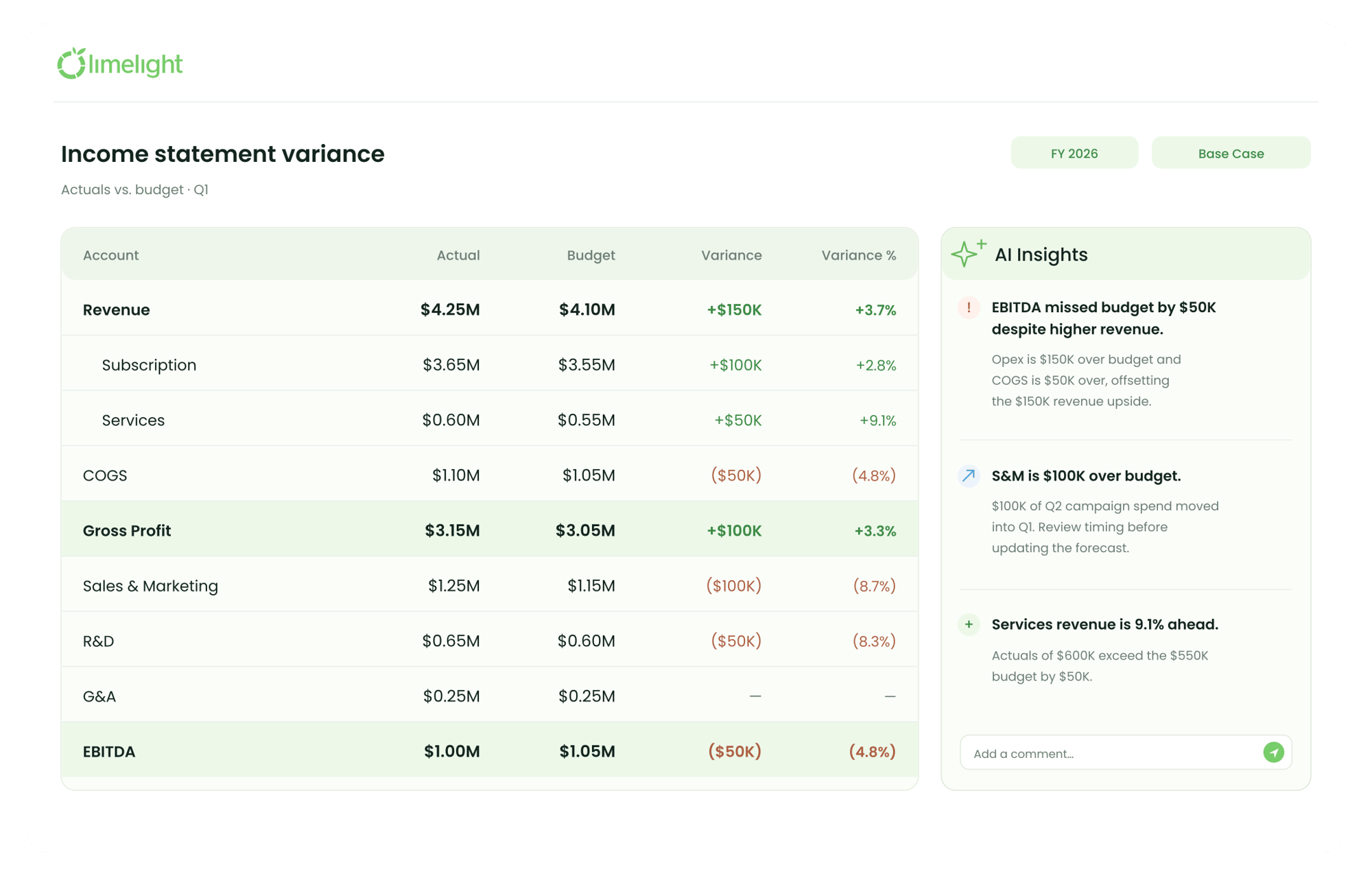
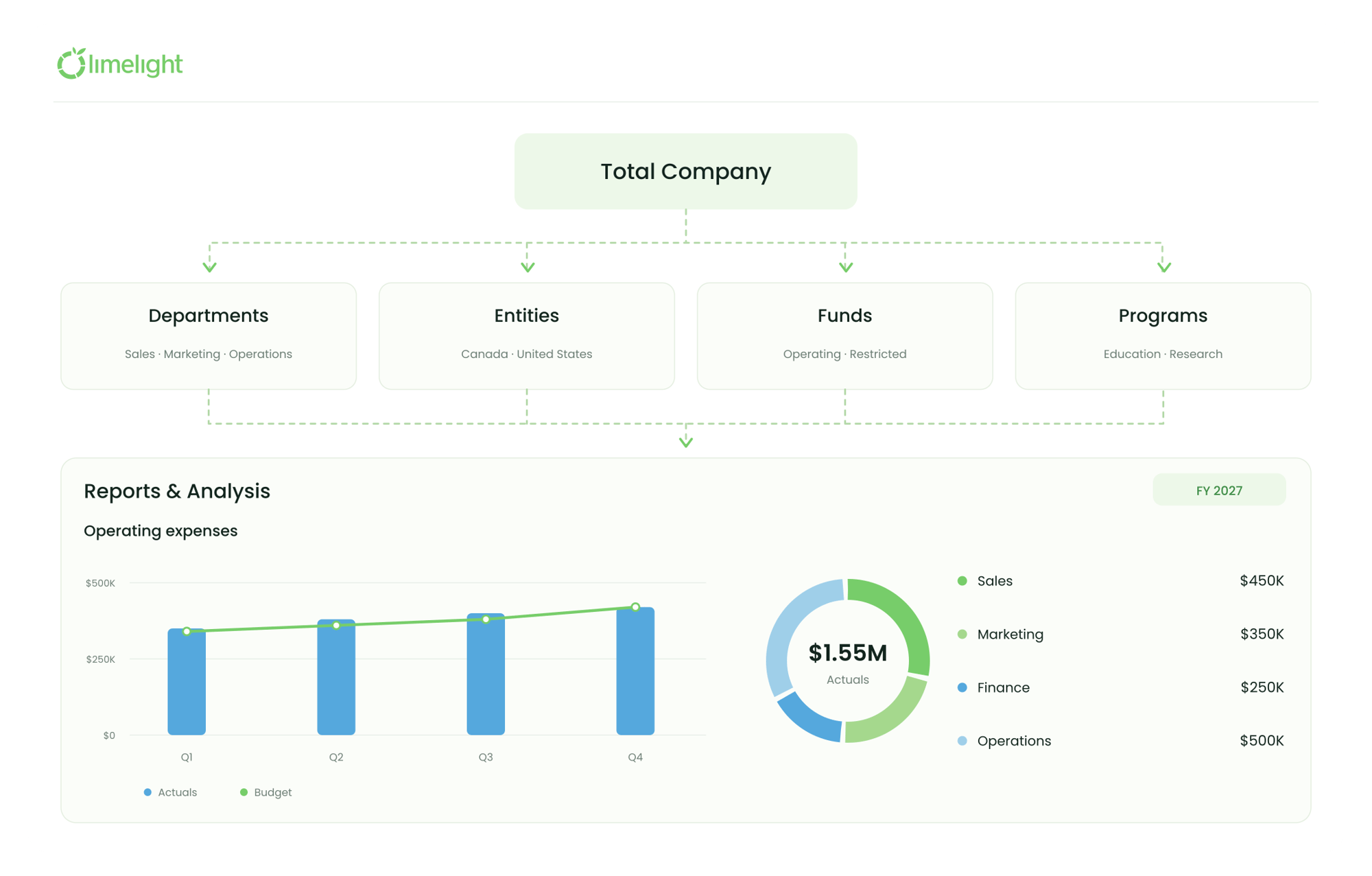
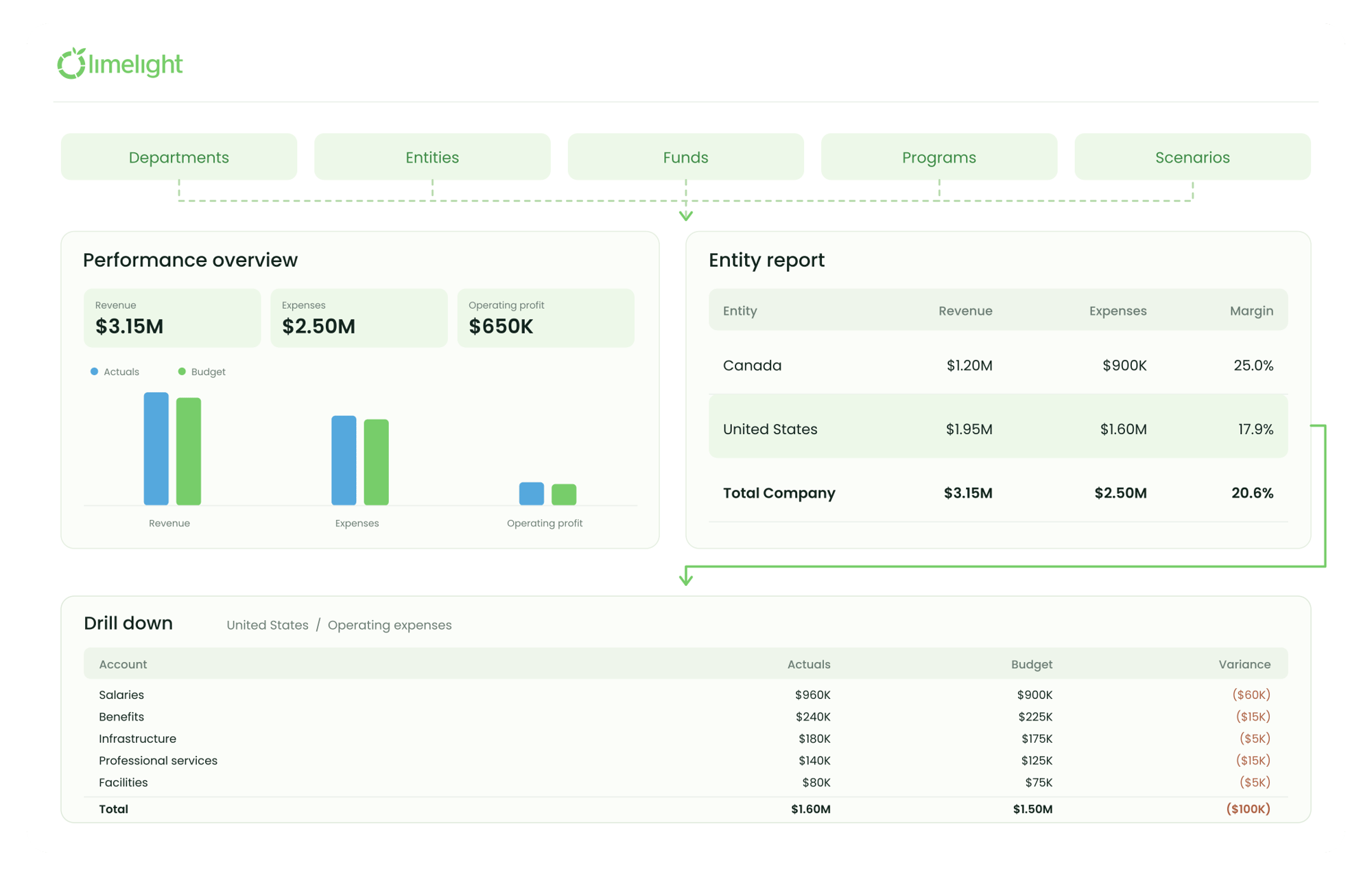
Look at the same numbers by department, entity, account, or scenario. Give each financial review the perspective it needs, while keeping the underlying data and planning logic together.
- Compare actuals, budgets, and forecasts using the same structure
- Review results by the dimensions that matter to your team
- Build different reporting views without separate spreadsheet models
The Switch Was Worth It!
Teams move faster, trust the numbers, and spend far less time buried in spreadsheets.
The modern Excel interface made adoption easy, while automation eliminated manual reporting and made forecasting faster and more reliable.
Pauline Poompan
Frequently Asked Questions about Modern FP&A
What does an FP&A model include?
The model brings together your financial data, accounts, dimensions, hierarchies, assumptions, and calculations. It is the foundation your team uses to budget, forecast, report, and analyze performance.
What is a dimension?
A dimension is a way to organize and review your numbers—for example, department, entity, account, period, or scenario. It lets finance look at the same data from different perspectives.
How do account hierarchies and rollups work?
Group detailed accounts into the financial lines your team uses. For example, infrastructure, consulting, and facilities can roll up into operating expenses. Use those groupings across plans and reports.
Can we connect business drivers to the financial plan?
Yes. Define assumptions and calculations for the way your business operates. Connect inputs such as revenue growth, hiring, and salary changes to the financial results they affect.
Can the same model support budgets, forecasts, and reports?
Yes. Your budgets, forecasts, reports, and dashboards use the same connected model. Reports update in real time when a planning input changes or new data arrives from a connected source.
Does finance manage the model?
Yes. Limelight is designed for finance to own its models and reporting structures. FP&A expertise is included in onboarding to incorporate best practices.
How is this different from using spreadsheet tabs?
Limelight keeps your data structure and planning logic in a connected model, instead of distributing them across separate files and tabs. This improves accuracy and enhances your financial model while saving a lot of time.
Ready to See Something Better Than Spreadsheets?
Build budgets once, keep forecasts current, and give leadership clearer answers.