
Budgeting & Forecasting
Give finance the visibility to lead.
Connect budgets, forecasts, actuals, and business drivers in one place so finance can see what changed, explain why it happened, and guide the business forward with confidence.
What Finance Teams Can Do With Connected Planning
Bring every plan, assumption, and report together so finance can move from planning to decisions faster.
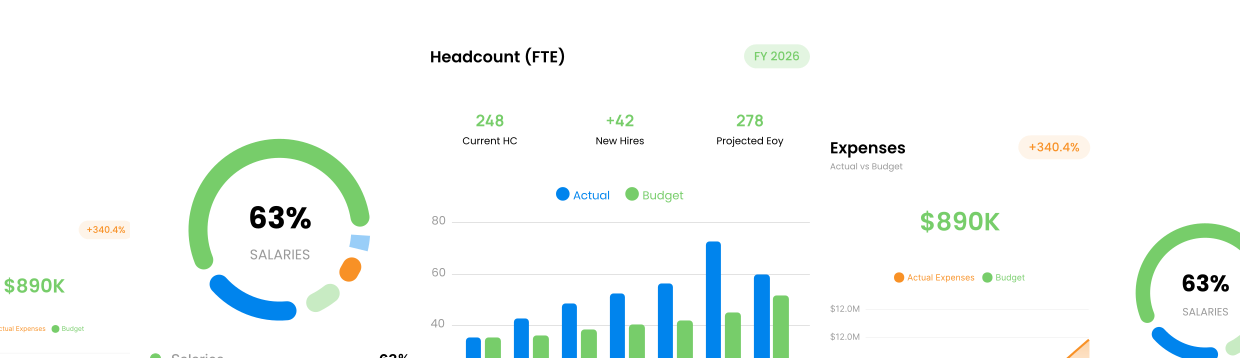
Plan Across the Business
Finance gets one place to manage assumptions, align teams, and keep every plan tied to the numbers.
See the Impact Instantly
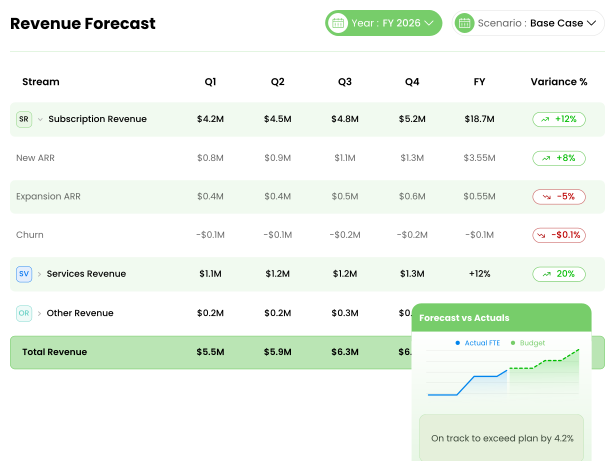
Move from Plan to Insight
Connected reports give finance a faster path from forecast updates to variance analysis, leadership reporting, and confident decisions.
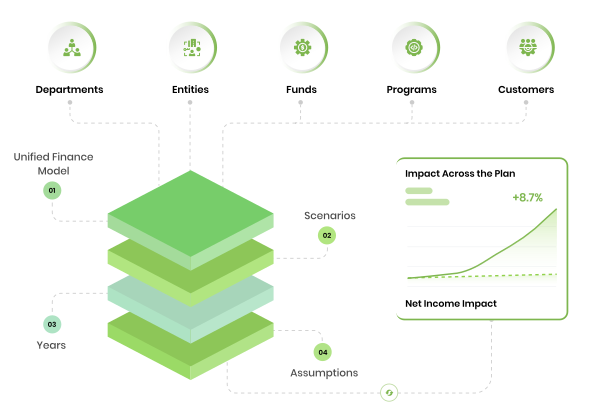
Plan across every layer of the business
Build plans across departments, entities, funds, programs, customers, vendors, employees, scenarios, and years — all powered by the same finance model.
- Plan at the level of detail your business needs
- Auto-consolidate inputs across teams and dimensions
- Update one assumption and see the impact across the plan
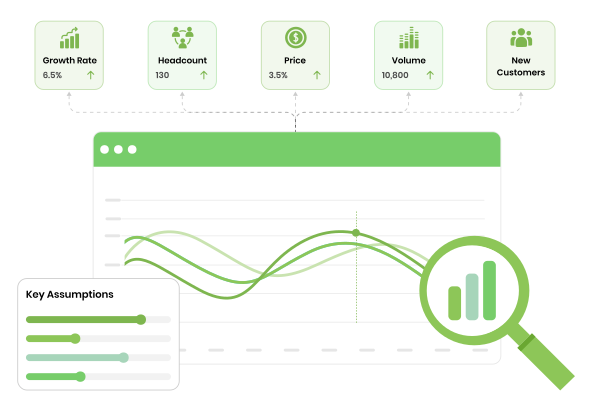
Forecast with drivers and assumptions
Set the assumptions behind revenue, expenses, workforce, allocations, and operational plans.
- Create drivers for growth, headcount, rates, volumes, and expenses
- Apply allocation logic across teams, funds, or programs
- Update assumptions and see the impact across the forecast
Plan with live data, shared context, and built-in controls
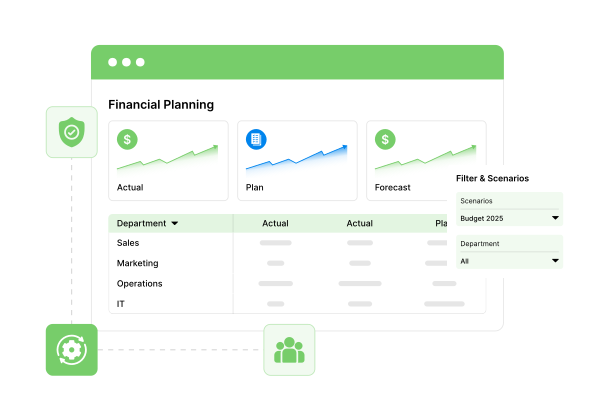
Work with live actuals, detailed planning inputs, notifications, and dynamic templates built for finance teams.
- Auto-refresh actuals from your ERP
- Plan at the subledger level
- Comment, notify users, and track changes
- Update templates dynamically with filters and scenarios
Plan it All
Operating Expenses
Revenue Planning
Workforce Planning
Scenario Planning
Forecasting
Balance Sheet Planning
Cash Flow Forecasting
Grant Planning
Driver-based Planning
Capital Planning
Long Range Planning
Department Planning
The Switch Was Worth It!
Teams move faster, trust the numbers, and spend far less time buried in spreadsheets.
The modern Excel interface made adoption easy, while automation eliminated manual reporting and made forecasting faster and more reliable.
Pauline Poompan
Frequently Asked Questions about Modern FP&A
What is modern FP&A software?
Modern FP&A software helps finance teams manage planning, forecasting, reporting, and analysis in one platform. It automates time- consuming processes so teams can work faster and trust the numbers.
How does Limelight support planning and forecasting?
Limelight lets finance teams create budgets, forecasts, scenarios, and driver-based plans. Teams can update assumptions, refresh actuals, and see the impact across reports and dashboards.
How is Limelight different from Excel?
Limelight gives finance teams an Excel-like planning experience with more control, automation, and security. It integrates with source systems, auto-consolidates data, and updates reports, forecasts, and templates dynamically as changes are made. Teams get the familiar look and feel of Excel, without managing disconnected files, manual updates, or version control.
How does Limelight support driver-based planning?
Finance teams can set drivers like revenue growth, pricing, headcount, expenses, volumes, or allocations. When a driver changes, Limelight shows the impact across the platform,
How does planning data flow into reports?
Limelight runs on a multi-dimensional model, so plans, forecasts, actuals, and reports all use the same structure. When finance updates a driver, assumption, department, entity, fund, or scenario, that change automatically flows through the model and into dashboards, variance analysis, and leadership reports.