Key takeaways
- Strategic financial planning sets direction. It translates long-term business priorities into financial targets, assumptions, and resource requirements.
- Strategic financial management turns direction into decisions. It governs capital allocation, liquidity, risk, profitability, and performance over time.
- One planning cycle should connect strategy, budgets, forecasts, scenarios, and reporting. Keeping these activities separate weakens accountability and slows course corrections.
- SMBs and enterprises use the same core process at different levels of detail. The main differences are model complexity, stakeholder involvement, governance, and system requirements.
- Reliable execution depends on clean data, finance-owned models, and clear decision rights. A sophisticated plan still fails when assumptions, ownership, or source data remain unclear.
Strategic financial planning and management connect long-term business objectives with the financial decisions required to deliver them. It gives CFOs and FP&A teams a structured way to set targets, test assumptions, allocate resources, manage risk, and revise plans as actual performance changes.
Without that connection, strategy stays separate from budgeting, and forecasts become reporting updates instead of decision tools. This guide explains what SFM covers, how the process works, how the approach changes by organization size, and how connected data and planning systems support execution.
What Is Strategic Financial Planning and Management?
Strategic financial planning defines the financial path an organization intends to follow. Strategic financial management governs the decisions, controls, and adjustments needed to stay on that path.
Strategic financial planning converts long-term business goals into financial targets, operating assumptions, investment requirements, and expected outcomes. It sits within the wider strategic-planning process, but focuses specifically on the financial implications of the chosen direction.
Strategic financial management (SFM) is the ongoing management of capital, cash flow, profitability, financial risk, and performance in support of those goals. Senior leadership sets the direction and approves major trade-offs. FP&A turns that direction into models, plans, forecasts, and decision support.
Planning and management therefore perform different jobs. Planning defines what the organization is trying to achieve and what the financial path should look like. Management decides how resources will be committed, how risks will be controlled, and when the plan must change.
What Strategic Financial Management Covers
A useful SFM framework connects five areas that are often managed separately. Each one affects whether the organization can fund its strategy and respond when conditions change.
- Financial objectives and measures. Finance translates business priorities into revenue, margin, cash flow, return, and balance-sheet targets that leaders can track.
- Long-range assumptions and models. The plan connects financial outcomes to assumptions about pricing, volume, headcount, capacity, capital spending, financing, and other business drivers.
- Capital and resource allocation. Leadership decides which initiatives, markets, products, and capabilities receive funding, and which commitments should be delayed or stopped.
- Risk and liquidity management. Finance tests whether the organization can meet obligations and protect strategic flexibility under weaker demand, higher costs, delayed collections, or other adverse conditions.
- Governance and performance review. Owners, review dates, decision thresholds, and escalation paths determine how the plan moves from an approved document to an operating discipline.
These components work as one system. A growth target without a capacity plan is incomplete. A capital plan without liquidity analysis can create avoidable pressure. A forecast without decision thresholds may explain what changed without telling leaders what to do next.
Strategic vs. Tactical Financial Management
Strategic and tactical financial management operate on different time horizons, but neither works well in isolation. Strategy determines the direction and major commitments. Tactical management controls the daily and annual decisions that keep execution on course.
How strategic and tactical financial management differ
|
Dimension
|
Strategic Financial Management
|
Tactical Financial Management
|
|
Primary question
|
Where should the organization invest, grow, reduce exposure, or change course?
|
What must finance and operating teams do now to meet approved targets and obligations?
|
|
Time horizon
|
Multi-year.
|
Daily through annual.
|
|
Typical owners
|
CFO, C-suite, board, and senior finance leadership.
|
FP&A, controllers, treasury, department leaders, and operating managers.
|
|
Typical outputs
|
Long-range plan, capital strategy, scenario set, target operating model, and risk limits.
|
Budget updates, cash actions, variance reviews, spending controls, collections, and operating forecasts.
|
|
Example decisions
|
Entering a market, restructuring debt, funding a major capital program, or acquiring a business.
|
Reallocating quarterly spend, delaying a purchase, managing receivables, or adjusting a hiring schedule.
|
|
Review pattern
|
Formal annual or mid-cycle reviews, plus event-driven decisions.
|
Monthly, quarterly, and continuous operational monitoring.
|
Table: Strategic financial management sets the multi-year direction, while tactical financial management controls near-term execution against that direction.
Operational budgeting sits mainly on the tactical side. It assigns one-year revenue targets, expense limits, and resource commitments. Strategic financial planning sets the broader priorities and constraints that should shape those budget decisions.
How the Strategic Financial Planning Process Works
The strategic financial planning process moves from business direction to measurable financial choices. The steps below apply to organizations of different sizes, although the modeling depth and governance will vary.
1. Translate strategy into financial targets
Start with the business decisions the plan must support. Examples include expanding into a new market, protecting margins, increasing production capacity, improving cash generation, or funding a product roadmap.
Convert those priorities into measurable targets. Revenue growth alone is rarely enough. Finance may also need margin, cash, return on investment, leverage, working capital, and capacity measures so leaders can see whether growth is financially sustainable.
2. Establish the baseline and financial constraints
Build a current-state view using actual performance, existing commitments, financing terms, capacity limits, and known risks. The baseline should make clear what the organization can fund before new initiatives are added.
Liquidity deserves separate attention. A business can meet its profit target and still face a cash shortfall if collections, inventory, capital spending, or debt service move against plan. A cash-flow forecast helps expose timing risk.
3. Identify the drivers behind the plan
Link important financial outcomes to operational causes. Revenue may depend on price, volume, conversion, retention, store count, utilization, or sales capacity. Labor cost may depend on headcount, start dates, compensation, benefits, and attrition.
Driver-based planning makes those relationships explicit. When an assumption changes, finance can trace the effect through the model instead of editing disconnected line items.
4. Build the base plan and alternative scenarios
The base plan represents leadership's current intended path. It should include the assumptions, initiatives, resource requirements, and financial outcomes expected under that path.
Alternative scenarios test decisions under materially different conditions. Useful scenario planning changes related assumptions together, quantifies the financial effect, and defines the response leadership would consider if conditions move toward that scenario.
5. Allocate resources and approve the operating budget
Resource allocation turns priorities into commitments. Finance and leadership compare initiatives based on expected return, cash requirements, strategic importance, risk, and execution capacity.
The annual budget then converts those choices into department-level or business-unit targets. A disciplined budget-forecasting process should preserve the assumptions behind the approved numbers so later variances can be explained rather than merely reported.
That approved package is the annual operating plan: the one-year execution of the strategy, with targets, resources, and owners set.
For line items that move with volume, flexible budgeting restates the plan at the actual activity level so those variances reflect performance rather than just volume.
6. Monitor performance and update the forecast
Compare actual results with the plan, identify which assumptions changed, and determine whether the difference is temporary or structural. Management reporting should connect the variance to a decision, owner, or follow-up action.
A rolling forecast keeps the forward-looking view current by adding new periods as completed periods fall away. It does not replace the budget. It updates the expected path as new information becomes available.
7. Review strategic choices and revise the long-range plan
A strategic review should answer more than whether the organization hit its budget. Leaders need to know whether the original strategy still makes financial sense, whether capital remains committed to the right priorities, and whether risk or liquidity limits have changed.
Update the long-range plan when the underlying economics, competitive conditions, financing environment, or strategic direction change enough to make the current plan misleading.
How the Process Changes for SMBs and Enterprises
SMBs and large enterprises follow the same basic logic, but scale changes the amount of detail and coordination required. The distinction matters because copying an enterprise process can overwhelm a smaller finance team, while an overly simple process can hide material risk in a complex organization.
SMB and enterprise planning requirements
|
Planning Area
|
SMB Approach
|
Enterprise Approach
|
|
Model scope
|
Focused model covering the main revenue, cost, cash, and funding drivers.
|
Multi-entity, multi-currency, and business-unit models with detailed operational dimensions.
|
|
Participation
|
Owner, finance lead, and a small group of functional managers.
|
CFO, FP&A, treasury, business-unit leaders, operations, HR, and other functions.
|
|
Scenario depth
|
A small set of practical cases tied to cash, demand, hiring, or funding.
|
Multiple scenarios covering market, regulatory, capital, currency, supply, and portfolio risks.
|
|
Resource allocation
|
Direct trade-offs among cash, hiring, inventory, marketing, and capital purchases.
|
Formal capital-allocation processes using investment criteria and cross-business prioritization.
|
|
Governance
|
Clear owners and a simple monthly or quarterly review cadence.
|
Standardized submissions, approval workflows, data governance, and executive or board review.
|
|
Systems
|
A controlled model may be sufficient while complexity remains limited.
|
Connected planning systems become more important as entities, users, data sources, and versions increase.
|
Table: Organization size changes the planning depth, governance, and system requirements, but not the core logic of strategic financial planning.
The practical test is not company size alone. Finance should increase process detail when the number of entities, decision-makers, currencies, funding sources, operating drivers, or regulatory requirements makes the existing process hard to control.
Strategic Financial Planning Examples
The examples below are hypothetical. Each one shows how a strategic decision becomes a set of assumptions, financial outputs, and management choices.
Examples of strategic financial planning decisions
|
Situation
|
Key Inputs
|
Financial Outputs
|
Decision Supported
|
|
Manufacturing automation
|
Equipment cost, financing mix, utilization, labor savings, maintenance, and implementation timing.
|
Cash requirement, depreciation, operating margin, payback period, and return on investment.
|
Whether to automate now, phase the investment, or retain the current process.
|
|
SaaS runway management
|
Growth, churn, collections, hiring dates, compensation, and funding assumptions.
|
Monthly cash burn, runway, recurring revenue, margin, and hiring capacity.
|
Whether to continue hiring, slow discretionary spending, or raise capital earlier.
|
|
Retail expansion
|
Store openings, sales ramp, average order value, occupancy cost, staffing, and inventory.
|
Revenue by location, break-even timing, working capital, and capital requirements.
|
Which locations to open, when to open them, and how many the business can fund.
|
|
Acquisition financing
|
Purchase price, debt terms, equity contribution, integration cost, synergies, and downside cases.
|
Leverage, interest coverage, cash flow, return on invested capital, and covenant headroom.
|
Whether the acquisition remains acceptable and which financing structure preserves flexibility.
|
Table: Strategic financial planning links a business decision to the assumptions, financial effects, and trade-offs leadership must evaluate.
A good model does not decide for management. It makes the economics visible, shows which assumptions carry the most risk, and clarifies what would have to be true for the decision to remain acceptable.
How Budgets, Forecasts, Scenarios, and Reporting Fit Together
Strategic planning becomes difficult to manage when each planning activity uses different assumptions, owners, or data. The tools below answer different questions and should form one connected cycle.
The role of each planning instrument
|
Planning Instrument
|
Question It Answers
|
Typical Horizon
|
Role in SFM
|
|
Strategic plan
|
Where is the organization going, and which financial outcomes must support that direction?
|
Multi-year.
|
Sets priorities, targets, major initiatives, and resource boundaries.
|
|
Budget
|
What has leadership approved for the next operating period?
|
Usually one fiscal year.
|
Assigns revenue, expense, headcount, and capital commitments.
|
|
Forecast
|
Where is performance currently expected to land?
|
Fixed or rolling forward-looking period.
|
Updates the expected outcome using current actuals and assumptions.
|
|
Scenario
|
What could happen, and what would management do?
|
Matched to the decision.
|
Tests alternative combinations of assumptions and prepared responses.
|
|
Management reporting
|
What changed, why did it change, and what decision follows?
|
Current and comparative periods.
|
Connects actual performance with the budget, forecast, and strategic targets.
|
Table: Strategic plans set direction, budgets approve commitments, forecasts update expectations, scenarios test alternatives, and reporting explains performance.
The cycle works when changes flow across these instruments. A delayed expansion should affect the forecast, cash outlook, headcount plan, and management report. It should not require finance to reconcile five unrelated versions after the decision has already been made.
Consistent financial reporting closes the loop. It gives leadership a current view of performance and enough context to decide whether the variance requires an operational correction, a forecast update, or a strategic review.
What Makes Strategic Financial Planning Reliable?
A planning process becomes credible when leadership can trace the numbers to agreed assumptions, source data, owners, and decisions. More model detail does not solve weak governance.
- Use consistent definitions. Revenue, headcount, customer, entity, and KPI definitions should match across planning and reporting.
- Assign assumption owners. Finance may manage the model, but business leaders should own the operating assumptions they control.
- Document decision thresholds. Define the variance, liquidity level, covenant risk, or operating signal that triggers a review.
- Keep model logic under finance control. Changes to formulas, hierarchies, allocations, and versions should be visible and governed.
- Connect source systems. Manual exports and spreadsheet handoffs increase reconciliation work and make it harder to explain which version is current.
- Set a review cadence that matches the risk. Stable operations may need monthly reporting and quarterly reforecasting. A funding event, acquisition, rapid expansion, or demand shock may require more frequent review.
Gartner's current FP&A leadership guidance places FP&A at the center of cost discipline, growth investment, and business decision support. That role depends on finance being able to deliver current analysis without spending the planning cycle rebuilding data and formulas.
Spreadsheets can support a limited process, but control weakens as contributors, entities, versions, and data sources increase. Finance teams often evaluate a cloud FP&A platform when manual consolidation and version control begin to delay decisions.
How Limelight Supports Strategic Financial Planning
Limelight is an FP&A software platform that connects modeling, planning, forecasting, workforce planning, reporting, and source-system data. The value for SFM is practical: finance can keep assumptions, actuals, plans, and reports inside one controlled environment instead of maintaining separate files for each stage.
1. Connect source systems to the planning model
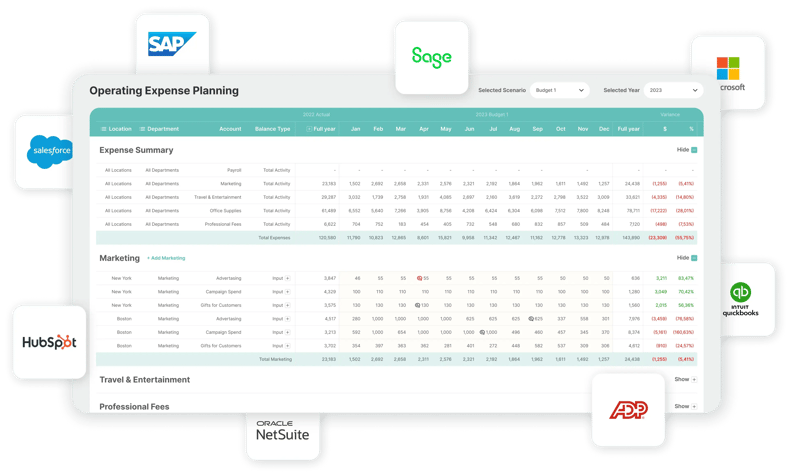
Limelight's integrations connect financial and operational data from accounting ERPs and other business systems. Centralizing source data reduces repeated exports and gives budgets, forecasts, and reports a common actuals base.
2. Structure one finance-owned model

The modeling environment organizes accounts, entities, departments, hierarchies, dimensions, rollups, and business logic. Finance can use the same structure across plans, reports, dashboards, and analysis, which reduces the risk of different outputs using different definitions.
3. Keep budgets, forecasts, and scenarios connected
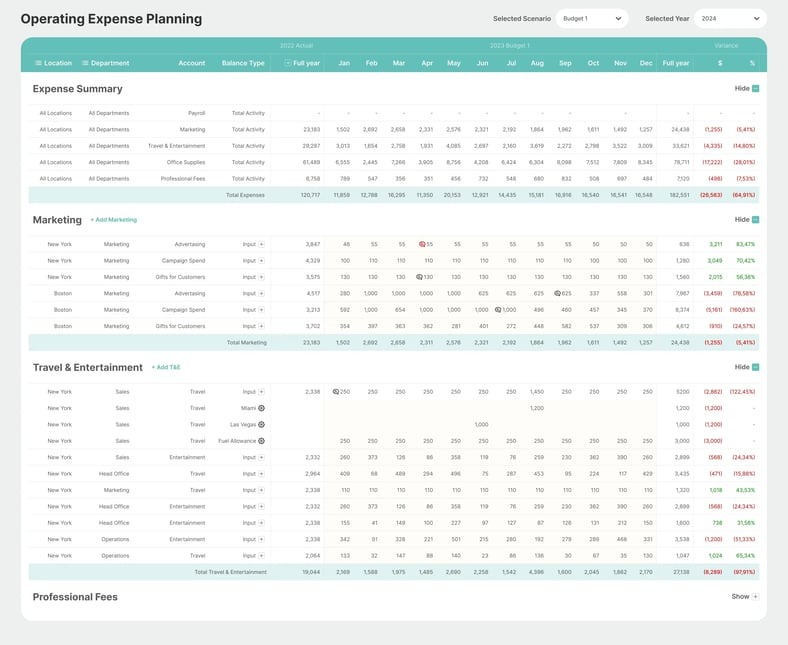
Limelight's planning and forecasting capabilities connect budgets, forecasts, actuals, assumptions, and business drivers. Finance can update an assumption, compare scenarios, and see the effect across the plan without maintaining a separate workbook for each version.
4. Include the financial effect of workforce decisions
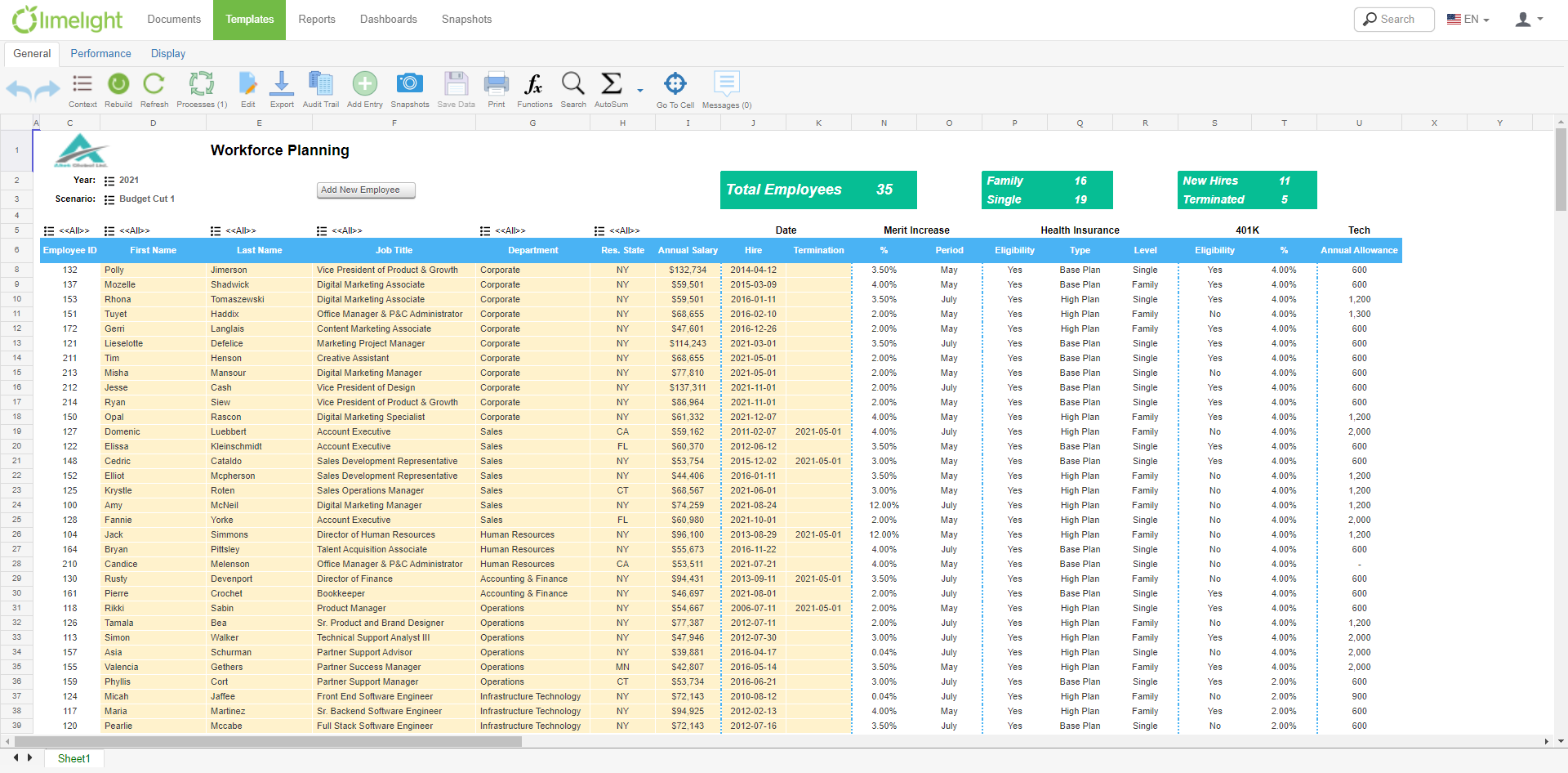
Workforce planning brings salaries, bonuses, benefits, start dates, open roles, and hiring scenarios into the financial plan. This helps finance evaluate the full cost and timing of headcount decisions before commitments are made.
5. Report performance with the underlying context
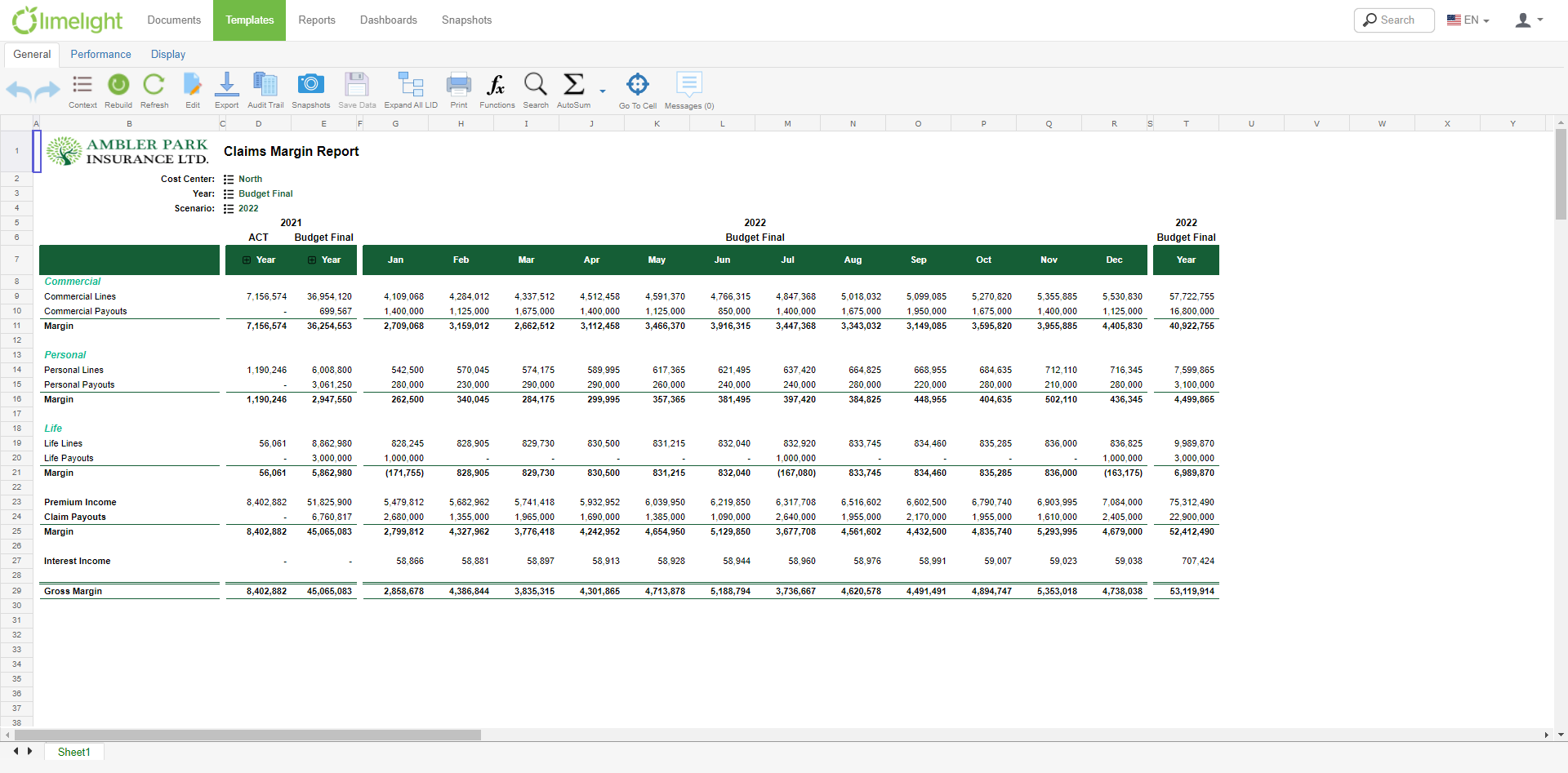
Limelight's reporting capabilities connect actuals, budgets, forecasts, and scenarios. Finance can compare periods, add variance explanations, and drill from a management view into the details behind a number.
6. Give leaders a visual view of performance
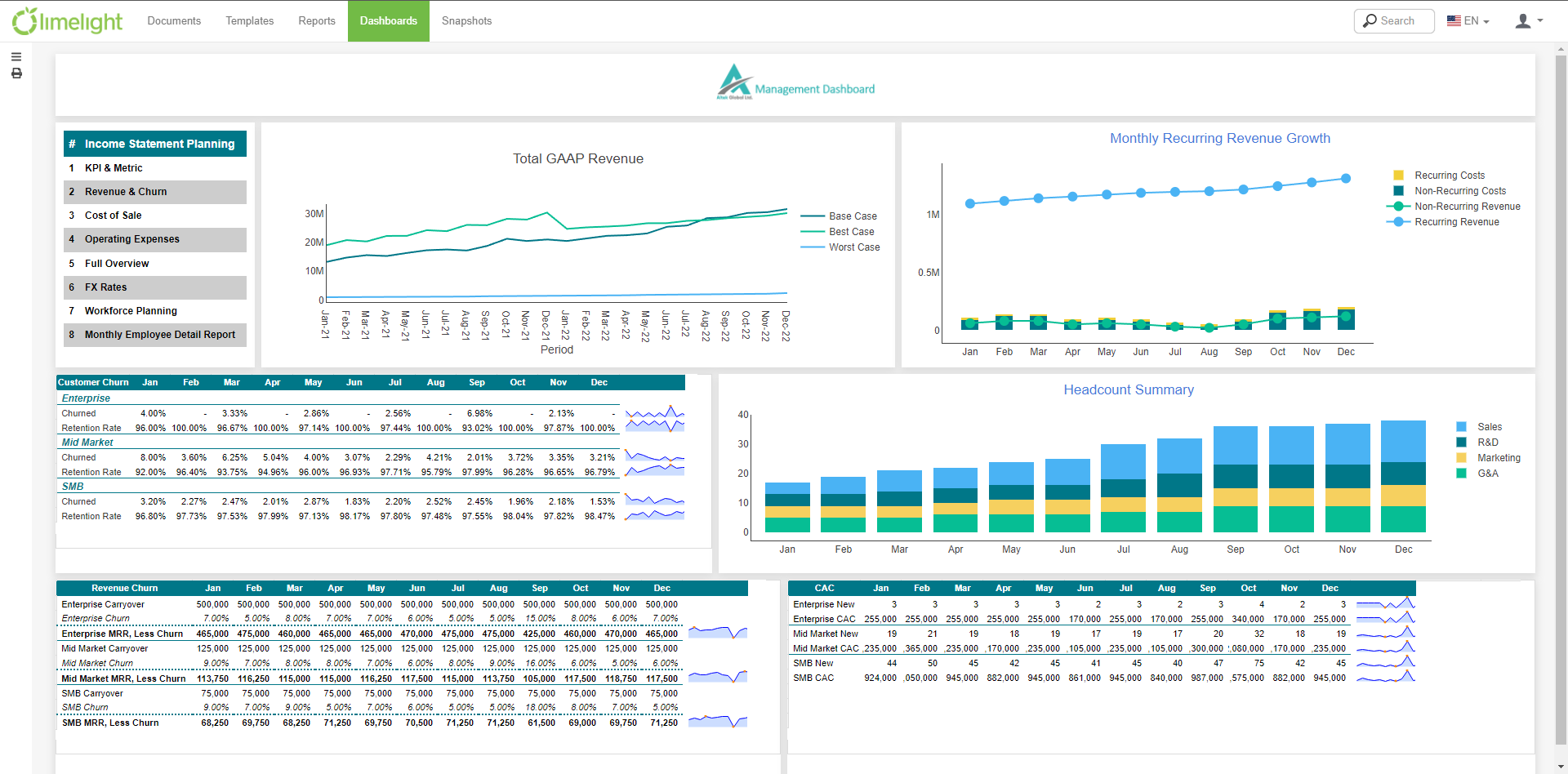
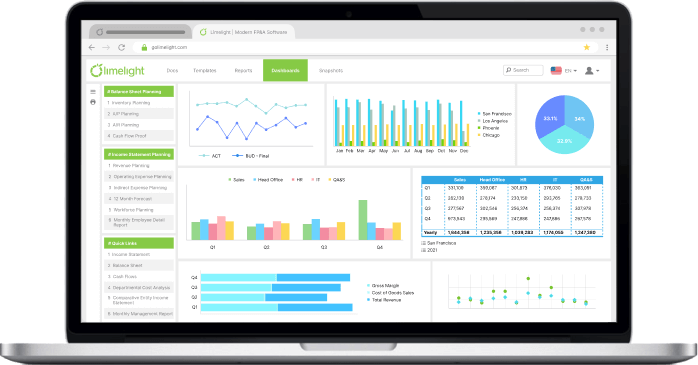
Interactive dashboards bring KPIs, trends, and financial results into a format that leaders can review without working through the underlying model. Because the dashboard uses the same connected data and structures, follow-up questions can move from the summary to the supporting detail.
Book a Limelight demo.
FAQs
These questions address ownership, scope, and review decisions that finance teams commonly need to settle before formalizing the process.
1. What is strategic financial planning and management?
Strategic financial planning and management sets long-term financial goals, builds the financial path required to reach them, and governs resource decisions as conditions change. It includes forecasting, risk assessment, capital allocation, and performance review.
2. What is strategic financial management (SFM)?
Strategic financial management is the ongoing management of capital, liquidity, profitability, financial risk, and performance in support of long-term business goals. It balances near-term operating trade-offs with the organization's wider financial direction.
3. What is the difference between strategic and tactical financial management?
Strategic financial management sets the multi-year direction for capital, growth, risk, and financial structure. Tactical financial management handles near-term execution, including cash management, budget control, receivables, spending, and operating forecasts.
4. What are the core elements of strategic financial management?
The core elements are financial objectives, long-range assumptions and models, capital and resource allocation, risk and liquidity management, and governance. Each element should connect to measurable targets, owners, and review decisions.
5. Who is responsible for strategic financial management?
The CFO, executive leadership, and board own the major strategic and capital decisions. FP&A translates those decisions into models, targets, budgets, forecasts, and performance analysis. Department and business-unit leaders own the operating assumptions and actions within their control.
6. How often should strategic financial plans be reviewed and updated?
Most organizations review the formal long-range plan at least annually and update the forecast monthly or quarterly. The plan should also be reviewed when a major assumption, financing condition, acquisition, market shift, or strategic decision makes the current version unreliable.


%20(1).svg)



.png?width=381&height=235&name=linkedinreal%20(27).png)