

%20(1).svg)
Picture this: You're sitting in a board meeting, and the CEO asks which investments are truly generating value for the company. While traditional metrics like ROI give you part of the story, they often miss the timing and quality of cash flows that keep businesses running. This is where Cash Flow Return on Investment (CFROI) becomes your secret weapon.
CFROI goes beyond surface-level profitability to reveal how efficiently your investments convert into actual cash flows. Unlike accounting-based metrics that can be manipulated through various reporting methods, CFROI focuses on the real money flowing in and out of your business.
This guide will walk you through everything you need to know about CFROI – from basic definitions to advanced applications. You'll learn how to calculate it, when to use it, and how it can transform your investment decision-making process.
What is Cash Flow Return on Investment (CFROI)?
Cash Flow Return on Investment (CFROI) measures the real economic return generated by an investment based on actual cash flows rather than accounting profits. Think of it as ROI's more sophisticated cousin that focuses on what matters most to businesses: actual cash generation.
CFROI was developed in the 1990s by consultants at Boston Consulting Group and HOLT Value Associates as a response to the limitations of traditional accounting-based performance metrics. The metric gained popularity because it provides a clearer picture of economic value creation by eliminating the distortions that can occur with different accounting methods.
The fundamental principle behind CFROI is simple: it measures how much cash flow an investment generates relative to the cash invested, adjusted for the time value of money. This approach makes CFROI particularly valuable for comparing investments across different time periods, industries, and accounting treatments.
What sets CFROI apart is its focus on economic reality rather than accounting conventions. While traditional metrics might show strong performance on paper, CFROI reveals whether that performance translates into actual cash that can be reinvested, distributed to shareholders, or used to fund growth.
Understanding the Importance of CFROI
CFROI has become increasingly important in today's data-driven business environment because it addresses several critical limitations of traditional financial metrics. For finance teams juggling multiple data sources and complex reporting requirements, CFROI provides a unified view of investment performance.
The metric serves as a powerful tool for capital allocation decisions. When you're evaluating multiple investment opportunities, CFROI helps you identify which projects will generate the most cash relative to their investment requirements. This is particularly valuable for growing companies that need to make smart choices about where to deploy limited resources.
CFROI also excels at performance measurement across different business units or time periods. Since it's based on cash flows rather than accounting profits, it eliminates many of the distortions that can make comparisons difficult. A manufacturing division and a software division might use different depreciation methods, but their CFROI figures will be directly comparable.
For investors and analysts, CFROI provides insights into management's ability to create real economic value. Companies with consistently high CFROI figures demonstrate strong operational efficiency and smart capital allocation – qualities that often translate into superior long-term stock performance.
The metric becomes particularly valuable during economic uncertainty. While accounting profits can be manipulated through various techniques, cash flows are much harder to disguise. CFROI helps you identify companies that generate genuine economic returns rather than just impressive-looking financial statements.
How to Calculate CFROI
Calculating CFROI requires a systematic approach that focuses on identifying the relevant cash flows and investment amounts. The process involves several steps that ensure you're capturing the true economic performance of your investment.
The calculation becomes more straightforward when you break it down into manageable components. You'll need to gather data about cash inflows, cash outflows, and the total investment amount, then apply the appropriate time value adjustments.
Formula for CFROI
The basic CFROI formula is:
CFROI = (Cash Flow / Gross Investment) × 100
However, the more comprehensive formula that accounts for the time value of money is:
CFROI = [(Net Cash Flow + Terminal Value) / Gross Investment]^(1/n) - 1
Where:
- Net Cash Flow = Operating cash flow minus maintenance capital expenditures
- Terminal Value = Estimated residual value of assets at the end of the analysis period
- Gross Investment = Total cash invested, including working capital and fixed assets
- n = Number of years in the analysis period
Each component plays a specific role in the calculation:
- Net Cash Flow represents the actual cash generated by operations after accounting for necessary reinvestment to maintain the business. This excludes growth capital expenditures but includes maintenance capex.
- Terminal Value captures the remaining worth of the investment at the end of your analysis period. This is crucial for long-term investments where significant value remains in the assets.
- Gross Investment includes all cash outflows required to make the investment operational, including initial capital expenditures, working capital requirements, and any other setup costs.
Example Calculation
Let's walk through a practical example using a manufacturing equipment investment:
Investment Details:
- Initial equipment cost: $1,000,000
- Additional working capital: $200,000
- Analysis period: 5 years
- Annual operating cash flow: $350,000
- Terminal value (equipment residual): $300,000
Step 1: Calculate Gross Investment Gross Investment = $1,000,000 + $200,000 = $1,200,000
Step 2: Calculate Total Cash Returns Total Cash Returns = (Annual Cash Flow × Years) + Terminal Value Total Cash Returns = ($350,000 × 5) + $300,000 = $2,050,000
Step 3: Apply CFROI Formula CFROI = [($2,050,000 / $1,200,000)^(1/5)] - 1 CFROI = [(1.708)^0.2] - 1 CFROI = 1.113 - 1 = 0.113 or 11.3%
This 11.3% CFROI means the investment generates an annualized cash return of 11.3%, which can be compared directly to the company's cost of capital or alternative investment opportunities.
The result tells us that for every dollar invested, the project generates approximately 11.3 cents in annual cash flow return, making it easier to evaluate against other potential investments or the company's hurdle rate.
Advantages and Limitations of CFROI
Understanding both the strengths and weaknesses of CFROI helps you use this metric more effectively in your financial analysis toolkit. Like any financial metric, CFROI works best when combined with other analytical approaches.
Advantages
- Cash Flow Focus: CFROI cuts through accounting noise to focus on what matters most – actual cash generation. This makes it particularly valuable when comparing companies with different accounting policies or when evaluating the real economic impact of investments.
- Inflation Adjustment: Unlike many accounting-based metrics, CFROI can be easily adjusted for inflation, providing a more accurate picture of real economic returns over time. This is especially important for long-term investment analysis.
- Cross-Industry Comparability: Since CFROI is based on cash flows rather than industry-specific accounting treatments, it enables meaningful comparisons across different sectors and business models.
- Management Performance Evaluation: CFROI provides a clear measure of how effectively management deploys capital. Companies with consistently high CFROI figures demonstrate strong operational efficiency and strategic decision-making.
- Investment Prioritization: When facing multiple investment opportunities, CFROI helps identify which projects will generate the highest cash returns relative to their investment requirements.
Limitations
- Data Intensity: Calculating CFROI requires detailed cash flow information that may not be readily available, especially for external analysts evaluating public companies. This can make the metric challenging to compute consistently.
- Terminal Value Estimation: The accuracy of CFROI calculations depends heavily on terminal value assumptions, which can be subjective and significantly impact results. Small changes in terminal value estimates can lead to large variations in CFROI.
- Short-Term Focus: CFROI may not capture the full value of investments with very long payback periods or those that create significant intangible value. R&D investments, for example, might show poor CFROI in early years despite creating substantial long-term value.
- Complexity: The calculation process is more complex than traditional metrics like ROI, which can make it harder to communicate to stakeholders who aren't familiar with advanced financial analysis.
- Historical Perspective: Like most financial metrics, CFROI is backward-looking and may not predict future performance, especially in rapidly changing business environments.
Applications of CFROI in Financial Analysis
CFROI serves multiple purposes in modern financial planning and analysis, making it particularly valuable for finance teams managing complex reporting requirements and multiple data sources.
- Capital Allocation Decisions: Finance teams use CFROI to evaluate competing investment proposals objectively. When you have limited capital and multiple opportunities, CFROI helps identify which projects will generate the highest cash returns. This is especially valuable for growing companies that need to make strategic choices about resource deployment.
- Performance Benchmarking: CFROI enables meaningful comparisons between different business units, even when they operate in different industries or use different accounting methods. A healthcare division and a manufacturing division might have vastly different profit margins, but their CFROI figures can be directly compared.
- Acquisition Analysis: When evaluating potential acquisitions, CFROI helps determine whether the target company generates sufficient cash flows to justify the purchase price. This analysis becomes particularly important when comparing acquisition opportunities across different industries.
- Portfolio Management: Investment managers use CFROI to evaluate the cash-generating efficiency of different holdings. Companies with consistently high CFROI figures often demonstrate superior management quality and operational efficiency.
- Strategic Planning: CFROI analysis helps identify which business segments or product lines create the most economic value. This information guides strategic decisions about where to invest for growth and which areas might need restructuring.
- Budgeting and Forecasting: Modern FP&A teams integrate CFROI analysis into their planning processes to ensure that budget allocations align with value creation objectives. This helps avoid the common trap of funding projects that look good on paper but don't generate adequate cash returns.
The metric becomes particularly powerful when integrated into comprehensive financial planning platforms that can automate data collection and calculation processes, reducing the manual work that often makes sophisticated analysis impractical for busy finance teams.
Streamline Your Financial Analysis with Modern FP&A Tools
While CFROI provides valuable insights into investment performance, calculating and tracking this metric across multiple investments can be time-consuming and error-prone when done manually in spreadsheets. Finance teams often struggle with data consolidation, version control, and maintaining accuracy across complex calculations.
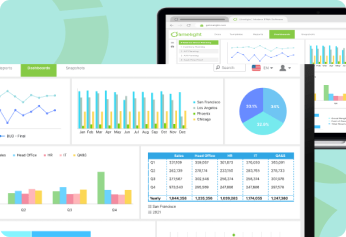
Modern financial planning and analysis platforms can automate CFROI calculations while integrating seamlessly with your existing ERP and accounting systems. Limelight offers intuitive tools that help finance teams move beyond spreadsheet limitations, providing pre-built templates for investment analysis and real-time dashboards that track key performance metrics like CFROI alongside traditional financial measures.
Want to see how it works in action? Book a demo to explore Limelight!
Table of Contents
Ready to put an end to outdated FP&A?
Get a personalized demo