

%20(1).svg)
Financial reporting has never been more complex or more important. As businesses expand across borders and investors demand transparency, understanding International Financial Reporting Standards (IFRS) becomes essential for finance professionals worldwide. This glossary serves as your comprehensive reference guide, breaking down complex IFRS concepts into clear, actionable insights that you can apply immediately in your work.
Whether you're preparing financial statements, analyzing investment opportunities, or navigating compliance requirements, this guide will help you understand the standards that govern how companies report their financial performance to the world.
Introduction to IFRS
What is IFRS?
International Financial Reporting Standards represent a set of accounting rules developed by the International Accounting Standards Board (IASB). These standards provide a common language for business affairs, ensuring that company accounts are understandable and comparable across international boundaries.
IFRS covers how companies should maintain and report their accounts, defining specific types of transactions and events with financial impact. The standards address recognition, measurement, presentation, and disclosure requirements for transactions that appear in financial statements.
The primary goal is simple: create consistency. When a company in Germany reports revenue, an investor in Japan should understand exactly what that means using the same framework a company in Brazil would use.
The Importance of IFRS
IFRS matters because it solves a fundamental problem in global business: comparability. Before widespread adoption of international standards, investors faced significant challenges when comparing companies from different countries due to varying accounting practices.
Key benefits include:
- Enhanced transparency: Standardized reporting requirements make it easier to understand company performance
- Improved comparability: Investors can more easily compare companies across different markets
- Reduced cost of capital: Companies often find it cheaper to raise funds when using internationally recognized standards
- Increased market access: Many stock exchanges require or prefer IFRS-compliant financial statements
For finance teams, IFRS adoption often means more robust internal processes, better data quality, and enhanced credibility with stakeholders. However, it also requires ongoing education and system updates to maintain compliance.
Key IFRS Standards
List of IFRS Standards
The current IFRS framework includes 17 standards, each addressing specific aspects of financial reporting:
|
Standard |
Title |
Key Focus |
|
IFRS 1 |
First-time Adoption |
Transition requirements for companies adopting IFRS |
|
IFRS 2 |
Share-based Payment |
Accounting for stock options and similar arrangements |
|
IFRS 3 |
Business Combinations |
Merger and acquisition accounting |
|
IFRS 4 |
Insurance Contracts |
Specialized requirements for insurance companies |
|
IFRS 5 |
Non-current Assets Held for Sale |
Assets being disposed of |
|
IFRS 6 |
Exploration for and Evaluation of Mineral Resources |
Mining and oil & gas exploration |
|
IFRS 7 |
Financial Instruments: Disclosures |
Risk disclosures for financial instruments |
|
IFRS 8 |
Operating Segments |
Segment reporting requirements |
|
IFRS 9 |
Financial Instruments |
Recognition and measurement of financial assets and liabilities |
|
IFRS 10 |
Consolidated Financial Statements |
Control and consolidation principles |
|
IFRS 11 |
Joint Arrangements |
Accounting for joint ventures and operations |
|
IFRS 12 |
Disclosure of Interests in Other Entities |
Disclosure requirements for subsidiaries and associates |
|
IFRS 13 |
Fair Value Measurement |
How to measure fair value |
|
IFRS 14 |
Regulatory Deferral Accounts |
Rate-regulated activities |
|
IFRS 15 |
Revenue from Contracts with Customers |
Revenue recognition principles |
|
IFRS 16 |
Leases |
Lease accounting for lessees and lessors |
|
IFRS 17 |
Insurance Contracts |
Comprehensive insurance contract accounting |
Notable Changes and Updates
The IASB regularly updates standards to address emerging issues and improve financial reporting quality. Recent significant changes include:
- IFRS 16 (Leases): Implemented in 2019, this standard fundamentally changed how companies account for leases. Most operating leases now appear on balance sheets, significantly impacting reported assets and liabilities for many companies.
- IFRS 17 (Insurance Contracts): Effective from 2023, this standard replaced IFRS 4 and introduced a comprehensive model for insurance contract accounting, requiring insurance companies to recognize profits more gradually over time.
- IFRS 15 (Revenue Recognition): This standard established a five-step model for revenue recognition, requiring companies to identify performance obligations and recognize revenue as they satisfy these obligations.
These updates reflect the IASB's commitment to keeping standards relevant in evolving business environments. Companies must stay current with these changes to maintain compliance and provide accurate financial reporting.
IFRS vs. GAAP
Differences Between IFRS and GAAP
While both IFRS and Generally Accepted Accounting Principles (GAAP) aim to provide reliable financial information, they differ in approach and specific requirements:
|
Aspect |
IFRS |
US GAAP |
|
Approach |
Principles-based |
Rules-based |
|
Inventory Valuation |
FIFO or weighted average |
FIFO, LIFO, or weighted average |
|
Development Costs |
Can be capitalized if criteria met |
Generally expensed |
|
Revaluation |
Allowed for property, plant & equipment |
Prohibited (historical cost only) |
|
Extraordinary Items |
Prohibited |
Allowed in rare circumstances |
|
Component Depreciation |
Required |
Allowed but not required |
|
Reversal of Impairments |
Allowed (except goodwill) |
Generally prohibited |
Key philosophical differences:
IFRS takes a principles-based approach, providing broad guidelines that require professional judgment in application. GAAP tends to be more rules-based, offering detailed guidance for specific situations.
This difference impacts how finance teams approach accounting decisions. IFRS requires more interpretation and documentation of reasoning, while GAAP often provides more specific guidance but can be less flexible in unique situations.
Convergence Efforts
The IASB and Financial Accounting Standards Board (FASB) have worked toward convergence for over two decades, though progress has been uneven.
Successful convergence areas:
- Revenue recognition (IFRS 15 and ASC 606)
- Lease accounting (IFRS 16 and ASC 842)
- Business combinations
Ongoing challenges:
- Different regulatory environments
- Varying stakeholder priorities
- Political and economic considerations
While full convergence remains unlikely, both standard-setters continue coordinating on major projects to minimize differences where possible.
Adoption and Implementation of IFRS
Global Adoption
IFRS has achieved remarkable global acceptance, with over 140 jurisdictions requiring or permitting its use:
- Full adoption: European Union, Australia, Canada, South Africa, and many others require IFRS for public companies.
- Permitted use: Countries like Japan and South Korea allow companies to choose between local GAAP and IFRS.
- Modified versions: Some countries adopt IFRS with local modifications to address specific regulatory or economic conditions.
- Notable non-adopters: The United States remains the largest economy not requiring IFRS, though foreign companies can use IFRS when listing on US exchanges.
This widespread adoption creates opportunities for companies seeking global capital markets access while presenting challenges for those operating across multiple jurisdictions with different requirements.
Implementation Challenges
Companies transitioning to IFRS face several common obstacles:
Step 1: System and Process Changes
- Updating accounting systems to capture required data
- Modifying financial reporting processes
- Establishing new controls and procedures
Step 2: Training and Education
- Educating finance teams on new requirements
- Training auditors and other stakeholders
- Developing ongoing education programs
Step 3: Data and Documentation
- Gathering historical data for comparative periods
- Creating documentation for accounting policy choices
- Establishing audit trails for key judgments
Step 4: Stakeholder Communication
- Explaining changes to investors and analysts
- Updating loan covenants and contracts
- Coordinating with board and audit committees
Common solutions:
- Phased implementation approaches
- External consulting support
- Pilot testing with subsidiaries
- Early stakeholder engagement
Criticisms and Challenges of IFRS
Common Criticisms
Despite widespread adoption, IFRS faces several persistent criticisms:
- Complexity: Some standards, particularly IFRS 9 (Financial Instruments) and IFRS 17 (Insurance Contracts), are highly complex and require significant expertise to implement correctly.
- Implementation costs: Smaller companies often struggle with the expense of system upgrades, training, and ongoing compliance requirements.
- Judgment requirements: The principles-based approach, while flexible, can lead to inconsistent application across companies and jurisdictions.
- Cultural differences: Standards developed primarily by Western standard-setters may not always align with business practices in other regions.
- Frequent changes: Regular updates create ongoing compliance burdens and costs for preparers.
Addressing Challenges
The IFRS Foundation and IASB actively work to address these concerns:
- Educational initiatives: The Foundation provides extensive educational materials, including webinars, guides, and case studies to support implementation.
- Post-implementation reviews: The IASB regularly reviews how standards work in practice and makes amendments when necessary.
- Stakeholder engagement: Extensive consultation processes ensure diverse perspectives are considered in standard development.
- Technology solutions: The Foundation explores how technology can simplify compliance and improve consistency.
- Small and medium entity focus: Separate IFRS for SMEs provides simplified requirements for smaller companies.
Modernizing Financial Planning with Technology
As IFRS requirements become more complex and data-intensive, finance teams increasingly need sophisticated tools to manage compliance efficiently. The manual processes that once worked for smaller organizations quickly become unsustainable as companies grow and reporting requirements expand.
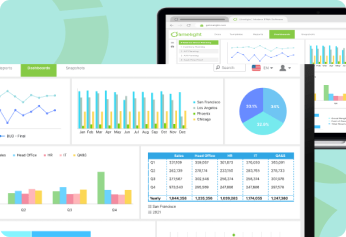
Modern financial planning and analysis (FP&A) platforms help organizations maintain IFRS compliance while improving overall financial management. These tools integrate with existing ERP systems, automate data consolidation, and provide the real-time visibility that today's finance leaders need to make informed decisions.
For finance teams managing IFRS compliance alongside budgeting, forecasting, and strategic planning responsibilities, the right technology platform can significantly reduce manual work while improving accuracy and speed of financial reporting.
Streamline Your IFRS Compliance Journey
Managing IFRS requirements alongside day-to-day financial planning can feel overwhelming, especially as your organization grows. Limelight's FP&A platform helps finance teams reduce the manual work that makes compliance challenging while providing the integrated data and reporting capabilities that IFRS demands.
With pre-built templates, seamless ERP integrations, and intuitive dashboards, Limelight enables finance teams to maintain compliance efficiently while focusing on strategic analysis and planning. Ready to see how modern FP&A tools can simplify your financial reporting process? Explore Limelight's solutions and discover how to make IFRS compliance part of a streamlined, strategic finance function.
Table of Contents
Ready to put an end to outdated FP&A?
Get a personalized demo