

%20(1).svg)
What Is a Static Budget?
Key takeaways
- A static budget sets fixed revenue and expense targets before a period and holds them constant for the entire budget period.
- It is also called a fixed budget; the two terms are interchangeable in FP&A practice.
- Static budgets are best suited to stable, fixed-cost operations and support cost centers such as HR, IT, legal, and facilities.
- The core variance formula is: Static Budget Variance = Actual Results − Static Budget Amount.
- Static budgets are simple to build but do not adapt to changes in activity level, which is why finance teams often supplement them with flexible budget analysis.
A static budget sets revenue, expense, and other financial targets before the budget period begins. These figures remain unchanged even when sales volume, operating costs, or business activity differ from the original assumptions.
Static budget and fixed budget mean the same thing. Companies typically lock the figures for a fiscal year, quarter, or project cycle.
Because the baseline does not change, finance teams can compare actual results with the original plan and identify variances easily. However, the budget may become less useful for day-to-day decisions when activity levels or market conditions shift significantly.
Unlike flexible budgets, which adjust to actual activity, or rolling budgets, which update continuously, a static budget preserves the original assumptions from the beginning to the end of the period.
Static Budget vs. Flexible Budget
A static budget remains fixed throughout the budget period, while a flexible budget adjusts to the actual level of business activity. The comparison below shows how the two approaches differ in planning, maintenance, and variance analysis.
|
Aspect |
Static Budget |
Flexible Budget |
|
Adaptability |
Remains fixed throughout the period |
Adjusts based on actual activity levels |
|
Complexity |
Simple to create and maintain |
Requires activity-based assumptions and more model maintenance |
|
Performance evaluation |
Compares actual results with the original plan |
Compares actual results with adjusted expectations |
|
Resource requirements |
Requires limited revision after approval |
Requires more frequent monitoring and updates |
|
Best suited for |
Stable operations and cost control |
Dynamic operations with variable activity |
|
Variance analysis |
Shows the total difference from the original plan |
Helps separate volume-driven and controllable variances |
Table: Static budgets keep targets fixed, while flexible budgets adjust them as business activity changes.
The choice depends on how much operating activity is likely to change during the period. A static budget provides a stable benchmark, while a flexible budget gives finance teams more context when revenue, production, or transaction volumes move away from the original assumptions.
Static budget vs. fixed budget: Are they the same?
Yes. “Static budget” and “fixed budget” refer to the same budgeting method: a plan whose figures remain unchanged throughout the budget period, regardless of changes in sales, costs, or activity levels.
How to Create a Static Budget
Creating a static budget follows a systematic approach that finance teams can implement with relative ease. For a broader view of where static budgeting fits within the planning cycle, see our guide to budgeting and forecasting.
The seven steps below outline the standard process for building a static budget.
- Step 1: Gather historical data from previous periods to understand spending patterns and revenue trends.
- Step 2: Analyze market conditions and business forecasts to establish realistic assumptions for the upcoming budget period.
- Step 3: Set fixed revenue targets based on expected sales volumes and pricing strategies.
- Step 4: Determine fixed expense allocations for each department or cost center, including salaries, rent, utilities, and operational costs. Cost-center allocation, the process of assigning budgeted expenditure to discrete organizational units such as finance, operations, or IT, is a core discipline at this step.
- Step 5: Allocate capital expenditure budgets for equipment, technology, or facility improvements.
- Step 6: Review and approve the budget with key stakeholders and department heads.
- Step 7: Distribute the finalized budget to all relevant teams and establish monitoring procedures.
Consider a manufacturing company that creates a static budget projecting $5 million in revenue and $4 million in expenses for the year. Even if actual sales reach $6 million or drop to $4.5 million, the original budget figures remain unchanged. This consistency allows managers to compare actual results against the original plan and identify variances that need attention.
Example of a Static Budget
The following example uses "Coastal Coffee Roasters," a small coffee shop chain planning its annual budget. The static budget assumes Coastal Coffee will serve approximately 3,000 customers monthly at an average transaction value of $21.
All figures remain fixed regardless of whether the chain serves fewer or more customers in any given month.
Coastal Coffee Roasters: annual static budget
|
Category |
Monthly Budget ($) |
Annual Budget ($) |
|
REVENUE |
||
|
Coffee Sales |
45,000 |
540,000 |
|
Food Sales |
15,000 |
180,000 |
|
Merchandise |
3,000 |
36,000 |
|
Total Revenue |
63,000 |
756,000 |
|
EXPENSES |
||
|
Cost of Goods Sold |
22,000 |
264,000 |
|
Rent |
8,000 |
96,000 |
|
Payroll |
18,000 |
216,000 |
|
Utilities |
2,500 |
30,000 |
|
Marketing |
3,000 |
36,000 |
|
Equipment Maintenance |
1,000 |
12,000 |
|
Insurance |
800 |
9,600 |
|
Miscellaneous |
1,200 |
14,400 |
|
Total Expenses |
56,500 |
678,000 |
|
Net Operating Result |
6,500 |
78,000 |
Table: Coastal Coffee Roasters’ static budget sets fixed monthly and annual targets for revenue and expenses.
Coastal Coffee Roasters: static budget vs. actual results
The following table converts the March variance discussion into a structured budget-vs-actual comparison.
|
Line Item |
Budget ($) |
Actual ($) |
Variance ($) |
Favorable / Unfavorable |
|
Coffee Sales |
45,000 |
48,000 |
+3,000 |
Favorable |
|
Food Sales |
15,000 |
14,200 |
-800 |
Unfavorable |
|
Merchandise |
3,000 |
3,100 |
+100 |
Favorable |
|
Total Revenue |
63,000 |
65,300 |
+2,300 |
Favorable |
|
Cost of Goods Sold |
22,000 |
23,500 |
-1,500 |
Unfavorable |
|
Payroll |
18,000 |
20,000 |
-2,000 |
Unfavorable |
|
Rent |
8,000 |
8,000 |
0 |
Neutral |
|
Utilities |
2,500 |
2,600 |
-100 |
Unfavorable |
|
Marketing |
3,000 |
3,000 |
0 |
Neutral |
|
Equipment Maintenance |
1,000 |
900 |
+100 |
Favorable |
|
Insurance |
800 |
800 |
0 |
Neutral |
|
Miscellaneous |
1,200 |
1,400 |
-200 |
Unfavorable |
|
Total Expenses |
56,500 |
60,200 |
-3,700 |
Unfavorable |
|
Net Operating Result |
6,500 |
5,100 |
-1,400 |
Unfavorable |
Table: Coastal Coffee Roasters’ March results include both favorable and unfavorable variances against its static budget.
The payroll overage of $2,000 shows as unfavorable on this static budget. However, the additional staffing was a direct response to higher customer volume, illustrating the core limitation: static budget variances do not automatically distinguish volume-driven costs from controllable overspending.
A flexible budget restatement would adjust the payroll and cost-of-goods targets to the actual volume level, isolating the true cost-control result.
How to Calculate Static Budget Variance
Static budget variance measures the difference between the approved budget and the actual result for a revenue or expense line.
Because increases affect revenue and expenses differently, calculate the variance based on the type of line item:
Revenue variance = Actual revenue − Budgeted revenue
Expense variance = Budgeted expense − Actual expense
Under this convention:
- A positive revenue variance is favorable because actual revenue exceeded budget.
- A negative revenue variance is unfavorable because actual revenue fell below budget.
- A positive expense variance is favorable because actual spending was below budget.
- A negative expense variance is unfavorable because actual spending exceeded budget.
Variance percentage
Variance % = Variance ÷ Absolute budgeted amount × 100
Using the absolute budgeted amount keeps the percentage denominator consistent. A percentage variance is not meaningful when the budgeted amount is zero.
Static budget variance: Budget vs. actual
|
Line item |
Budget ($) |
Actual ($) |
Variance ($) |
Status |
|
Coffee sales |
45,000 |
48,000 |
+3,000 |
Favorable |
|
Food sales |
15,000 |
14,200 |
−800 |
Unfavorable |
|
Merchandise |
3,000 |
3,100 |
+100 |
Favorable |
|
Total revenue |
63,000 |
65,300 |
+2,300 |
Favorable |
|
Cost of goods sold |
22,000 |
23,500 |
−1,500 |
Unfavorable |
|
Rent |
8,000 |
8,000 |
0 |
Neutral |
|
Payroll |
18,000 |
20,000 |
−2,000 |
Unfavorable |
|
Utilities |
2,500 |
2,600 |
−100 |
Unfavorable |
|
Marketing |
3,000 |
3,000 |
0 |
Neutral |
|
Equipment maintenance |
1,000 |
900 |
+100 |
Favorable |
|
Insurance |
800 |
800 |
0 |
Neutral |
|
Miscellaneous |
1,200 |
1,400 |
−200 |
Unfavorable |
|
Total expenses |
56,500 |
60,200 |
−3,700 |
Unfavorable |
|
Net operating result |
6,500 |
5,100 |
−1,400 |
Unfavorable |
Table: Coastal Coffee Roasters’ illustrative budget and actual results.
Activity-level caveat
A favorable or unfavorable variance does not explain why the result changed. For example, higher payroll and cost-of-goods expenses may result from serving more customers rather than poor cost control.
Finance teams should therefore separate:
- Volume-driven variances, caused by changes in sales or activity levels.
- Price or efficiency variances, caused by changes in cost, productivity, or spending control.
A flexible budget can restate expected revenue and expenses at the actual activity level, helping finance distinguish operational growth from controllable overspending.
How to read a static budget variance report
When reviewing a static budget variance report, finance teams should work through the following steps:
- Review line by line.
Examine each revenue and expense line individually rather than relying on a single net figure, which can mask offsetting variances. - Flag variances exceeding a defined threshold.
Establish a materiality threshold, such as 5% or a fixed dollar amount, and escalate any line that breaches it. - Distinguish volume-driven from cost-control variances.
Determine whether a variance is attributable to a change in activity level or to actual price or efficiency differences. This distinction is critical for assigning accountability correctly. - Escalate unfavorable variances with driver-level commentary.
When presenting unfavorable results to department heads, accompany each variance with a brief explanation of the underlying driver so that corrective action, if warranted, is targeted and specific.
Advantages of Static Budgeting
Static budgets offer several compelling benefits that make them attractive to many organizations:
1. Simplicity and ease of use
Static budgets are straightforward to create and understand. Finance teams don't need complex modeling or constant adjustments, making them ideal for organizations with limited resources or those new to formal budgeting processes.
2. Clear performance benchmarks
With fixed targets, managers can easily identify when actual results deviate from planned expectations. This clarity helps pinpoint areas that need immediate attention or investigation.
3. Cost control and discipline
Static budgets can support spending discipline by establishing firm limits. Department heads must work within their allocated amounts, preventing budget creep and encouraging efficient resource utilization.
4. Reduced administrative burden
Once established, static budgets require minimal ongoing maintenance. Finance teams can focus on analysis and reporting rather than constantly updating budget figures.
5. Predictable planning framework
Organizations can make long-term commitments and strategic decisions based on stable budget assumptions. This predictability is particularly valuable for contract negotiations and resource allocation.
Limitations of Static Budgeting
Despite their benefits, static budgets come with notable drawbacks that finance leaders must consider:
1. Lack of adaptability
Static budgets can't respond to changing market conditions, unexpected opportunities, or economic shifts. A technology company might miss out on a lucrative contract because its static budget doesn't allow for additional marketing expenses mid-year.
This lack of flexibility can also slow the forecasting cycle. The 2025 FP&A Trends Survey, based on 459 finance professionals, found that 38% of teams using basic or non-driver-based models needed more than 10 days to produce a forecast. In comparison, 20% of teams using fully driver-based or dynamic models completed one in under two days.
2. Unrealistic performance expectations
When actual business activity differs significantly from budgeted levels, static budgets can create misleading performance indicators. A restaurant chain might appear to be overspending on food costs during a busy season, when in reality, higher sales justify the increased expenses.
This is precisely where driver-based forecasting provides additional analytical context by tying cost expectations directly to volume drivers.
3. Limited usefulness for dynamic environments
Industries with seasonal fluctuations, volatile demand, or rapidly changing conditions find static budgets particularly challenging. A fashion retailer facing unexpected trend changes can't easily reallocate resources from slow-moving inventory to hot new items.
4. Potential for gaming the system
Managers might manipulate spending patterns to meet static budget targets, leading to suboptimal decisions like rushing unnecessary purchases at year-end or delaying important investments.
To mitigate these limitations, organizations can implement quarterly budget reviews, establish contingency funds for unexpected opportunities, or combine static budgets with flexible monitoring tools that provide context for variances.
When to Use a Static Budget
Static budgets work best in specific organizational contexts and industry environments:
1. Stable operating environments
Companies with consistent customer demand, predictable costs, and minimal seasonal variation benefit most from static budgeting. Government agencies, utility companies, and established service providers often fall into this category.
2. Cost-control focused organizations
When the primary goal is maintaining strict spending limits and preventing budget overruns, static budgets provide clear boundaries that managers can easily understand and follow.
3. Organizations with limited resources
Small businesses or nonprofits with minimal finance staff find static budgets manageable without requiring extensive analytical capabilities or sophisticated budgeting software.
4. Administrative and support functions
Even in dynamic organizations, certain departments like HR, IT, legal, or facilities management may use static budgets effectively since their costs remain relatively stable regardless of business volume.
In FP&A practice, these fixed-cost support functions, often referred to as cost centers, represent the most natural and defensible application of static budgeting because their expenditure does not vary with revenue-generating activity.
Key questions to determine suitability:
- Are our operations relatively predictable from period to period?
- Is cost control a higher priority than operational flexibility?
- Do we have limited resources for budget management and analysis?
- Are our revenue streams stable and well-established?
If you answer "yes" to most of these questions, a static budget might be the right choice for your organization.
|
For a deeper look at how static budgeting fits within the full planning cycle, see our complete guide to the annual budgeting process. |
Streamline Your Budgeting with Modern FP&A Solutions
Static budgets are supposed to stay fixed. Business conditions aren’t. Sales volume changes, suppliers raise prices, and leadership still wants a current view of the year.
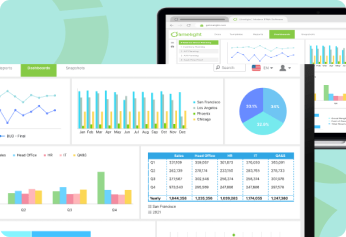
Limelight’s FP&A platform keeps the approved budget, actual results, revised forecasts, and management reports connected. Finance can protect the original baseline without letting the forecast go stale.
1. Keep one trusted structure for every view
A finance-owned model holds the account structure, department mappings, entity rollups, scenario versions, and reporting logic in one place. If finance changes a hierarchy, the update carries through to the budget, forecast, actuals, and reports.
No one has to correct the same mapping in four workbooks and hope they still agree.
2. Bring actuals in without manual exports
For teams running NetSuite, Sage Intacct, or Microsoft Dynamics, Limelight pulls source data through direct API connections. That removes the usual CSV handoff between the ERP and the planning model.
Budget-versus-actual reviews can start sooner, before another spreadsheet copy becomes the unofficial master.
3. Reforecast without overwriting the budget
Suppose unit volume drops halfway through the quarter, or supplier costs climb. Limelight’s planning and forecasting tools let finance update drivers, build flexible models, run what-if scenarios, and refresh a rolling forecast while the approved static budget remains available for comparison. Management sees both the goal it approved and the outcome finance now expects.
4. Trace variances back to their cause
An unfavorable variance says something moved. It doesn’t explain why. With financial reporting and variance analysis, analysts can drill into account-level or transaction-level details and answer follow-up questions with ad hoc reports. That distinction matters when a higher expense comes from increased sales activity rather than poor cost control.
5. Produce variance explanations faster
Writing variance notes each month is necessary. Starting every explanation from a blank page isn’t. Limelight AI can draft variance explanations, flag anomalies, call out trends, and answer questions based on the reports. Finance still owns the judgment, but analysts spend less time producing the first draft and more time checking whether the explanation holds up.
See Limelight in action. Book a demo.
Frequently Asked Questions
1. What is a static budget?
A static budget is a fixed financial plan that sets revenue and expense targets before a period and does not change during it. It provides a constant benchmark to measure actual performance against, regardless of changes in sales volume or activity level.
2. Is a static budget the same as a fixed budget?
Yes. "Static budget" and "fixed budget" are the same thing: a plan whose figures stay unchanged for the entire budget period regardless of actual sales, costs, or activity levels. The terms are used interchangeably in FP&A practice.
3. How do you calculate static budget variance?
Static Budget Variance = Actual Results minus Static Budget Amount, calculated per line item. Express as a percentage by dividing the variance by the budgeted amount. Label each result favorable (revenue above budget or expenses below) or unfavorable (the reverse).
4. What is the difference between a static budget and a flexible budget?
A static budget stays fixed for the period regardless of actual activity. A flexible budget adjusts revenue and expense targets to the actual activity level achieved, allowing finance teams to isolate whether a variance came from volume changes or from cost control.
5. When should a company use a static budget?
Static budgets fit stable, predictable operations: fixed-cost departments such as HR, IT, legal, and facilities; organizations working within fixed appropriations such as nonprofits and government entities; and project budgets with a defined, locked scope.
6. What are the main advantages and disadvantages of a static budget?
Advantages include simplicity to build, a clear performance benchmark, spending discipline, and low ongoing maintenance. Disadvantages include the inability to adapt to change, variances that can mislead when activity levels shift, and a poor fit for variable-cost or high-volatility environments.
Table of Contents
Ready to put an end to outdated FP&A?
Get a personalized demo