

%20(1).svg)
7 Vena Alternatives for Nonprofit Finance Teams (2026)
By Laks Satchi |
Last Updated: July 31, 2026
Vena is a capable FP&A platform with a dedicated not-for-profit offering. It works well for finance teams that want Excel-governed budgeting with workflow controls. But nonprofit buyers leave Vena for different reasons: some want off Excel entirely, some need cheaper licensing, some need purpose-built fund and grant budgeting, and some have outgrown what the platform can do with multi-program cost allocation and board reporting. This guide compares 7 alternatives through that nonprofit-specific lens.
One distinction matters throughout: no FP&A platform replaces the accounting system. Sage Intacct, Blackbaud Financial Edge NXT, or NetSuite handles the ledger and tracks net assets with and without donor restrictions at the transaction level. The FP&A platform imports those funds, grant, and program dimensions and uses them for budgeting, forecasting, and reporting.
The question in every section below is how well each platform works with the structure your accounting system provides.
See how Limelight works for nonprofit finance teams
How we evaluated these platforms We compared nonprofit workflow fit, ERP connectivity, pricing visibility, implementation requirements, reporting flexibility, and customer-review data from G2, Capterra, TrustRadius, and Gartner Peer Insights. Pricing and ratings were checked in July 2026 and may change. Pricing and implementation estimates are based on publicly available vendor information and third-party marketplace data. Actual quotes vary by organization size, users, modules, integrations, contract length, and professional-services scope. |
Vena is a capable platform for general-purpose FP&A. The friction points below are specific to nonprofit operating requirements and do not apply equally to every Vena customer.
Nonprofits with complex fund structures need their FP&A platform to import and preserve fund, grant, program, and restriction dimensions from the accounting system. Vena's templates can be configured for this, but the configuration is a custom build. G2 reviewers have noted that adding departments or making organizational changes in Vena may require outside consultant support.
For a nonprofit managing 15 programs across multiple funding sources, that consultant dependency can become a recurring annual cost rather than a one-time implementation fee.
Section 501(c)(3) and 501(c)(4) organizations generally report expenses across program services, management and general, and fundraising in Part IX of Form 990. Allocation methods must be reasonable, accurate, and documented. In Vena, building this allocation model means constructing custom Excel templates with the right dimensional structure. That is achievable, but it is also the kind of manual modeling work nonprofits are trying to reduce by moving off raw spreadsheets.
For more on why this allocation matters operationally, see our guide to nonprofit operating expenses.
Vena estimates implementation at 2 to 5 months. G2 data shows an average time to ROI of approximately 20 months. For a nonprofit finance team with a fixed annual technology budget, that means paying license fees for a significant period before the platform delivers its full planned value. In contrast, Limelight's typical deployments run approximately 2 to 12 weeks (depending on data readiness, integration scope, and model complexity), and Martus Solutions reports full implementation in approximately 3 weeks.
Vena's published pricing starts at approximately $30K/year (third-party estimate). Professional services for implementation and ongoing model changes can push year-one costs significantly higher. Multi-year contracts are common. For comparison, Limelight's published starting price is $1,400/month with flat-rate pricing, and Martus's publicly listed starting price is $6,000 to $6,650/year with implementation support included.
Vena's full feature set relies on Microsoft Excel for Windows. Buyers with Mac-heavy teams should confirm which workflows are available through Vena's browser-based and Microsoft 365 experiences and which still depend on desktop Excel for Windows.
Not every FP&A platform fits nonprofit operations. These five criteria separate platforms that work well with nonprofit financial structures from platforms that require extensive custom work.
For a broader view of nonprofit financial reporting, see our guides to nonprofit financial statements and nonprofit board reports.
Before the detailed write-ups, here is how all 7 alternatives compare on the criteria that matter most for nonprofit finance teams.
|
Platform |
Best for |
Fund/grant fit |
Starting price |
Impl. time |
Key ERP integrations |
|---|---|---|---|---|---|
|
Limelight |
Mid-market nonprofits needing cloud-native FP&A |
Configurable, cloud-native |
Published: $1,400/mo flat-rate |
~2-12 weeks |
NetSuite, Sage Intacct, Dynamics, QBO, Financial Edge, Abila MIP |
|
Martus |
Smaller nonprofits, faith-based orgs |
Native, nonprofit-first |
Published: $6,000-$6,650/yr |
~3 weeks |
Sage Intacct, QBO, Financial Edge NXT, Dynamics |
|
Planful |
Larger nonprofits needing consolidation |
Configurable |
Est. $30K-$50K/yr |
3-6 months |
NetSuite, Sage Intacct, Dynamics |
|
Datarails |
Excel-first teams wanting automation |
Configurable via Excel |
Custom quote |
30-90 days |
NetSuite, Sage Intacct, QBO, Dynamics |
|
Workday Adaptive |
Orgs already on Workday HCM/Fin. |
Configurable |
Est. $20-40/employee/yr |
6-12 months |
Workday native; limited external |
|
Prophix |
Large national nonprofits, 500+ staff |
Configurable |
Est. $50K+/yr (min contract) |
8+ weeks |
SAP, Sage Intacct, Dynamics, NetSuite |
|
Jedox |
Complex multi-program structures |
Configurable via OLAP cubes |
Custom quote |
Varies |
SAP, Sage Intacct, Dynamics, QBO |
Ratings and review counts checked July 2026 via G2 product pages. Pricing marked 'Published' is from vendor websites; 'Est.' is from third-party marketplace sources. Actual quotes vary.
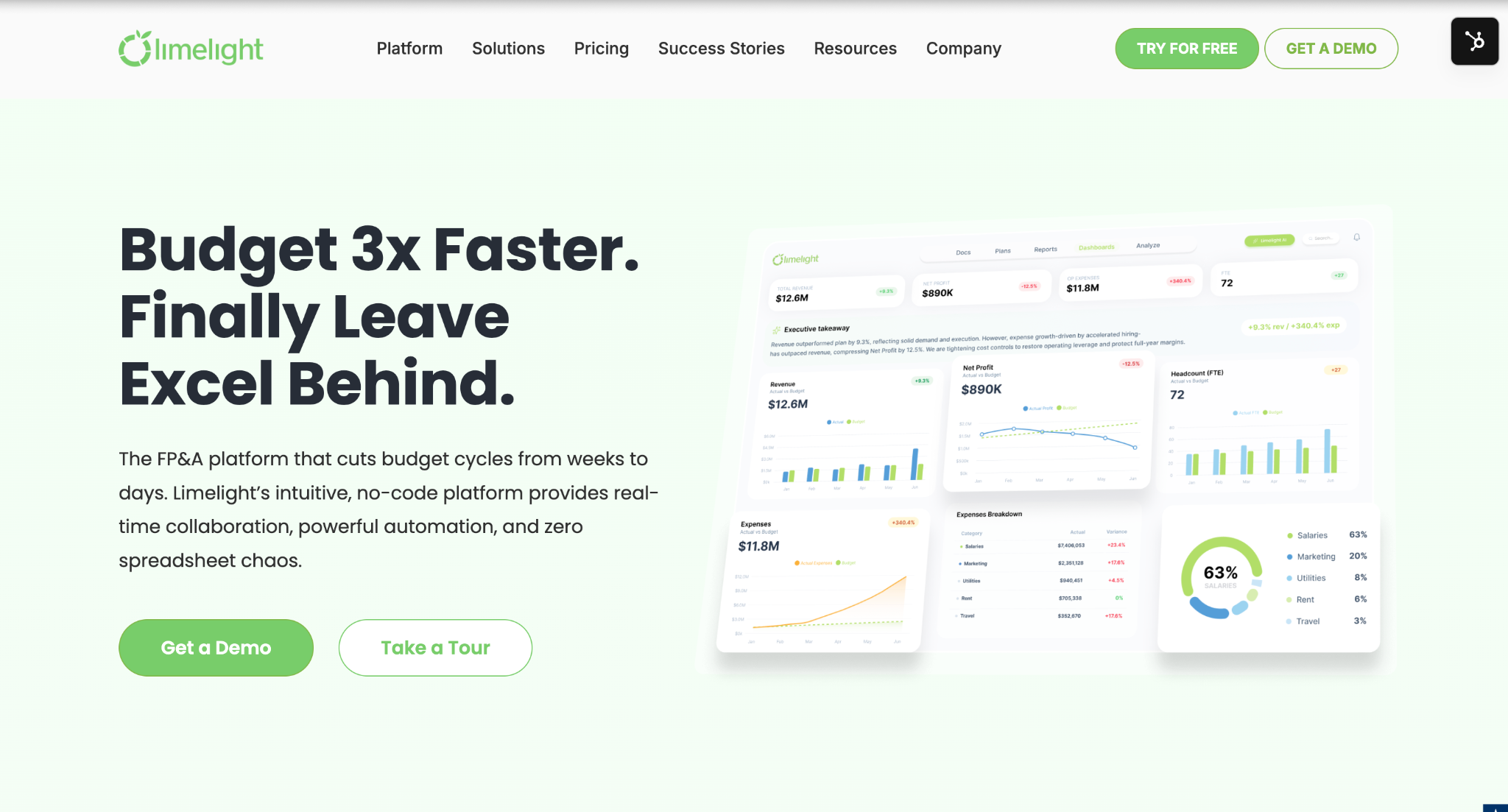
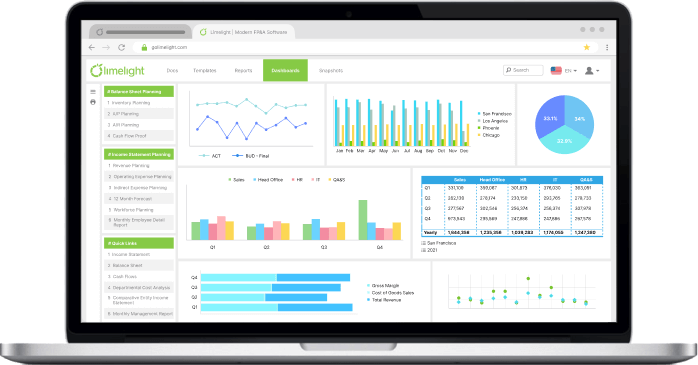
Limelight is a cloud-native FP&A platform built for mid-market finance teams. It replaces spreadsheet-based budgeting, forecasting, and reporting with a purpose-built modeling engine that connects to your ERP in real time and eliminates the version-control and formula-error risks that come with Excel-dependent tools. For a detailed architectural comparison with Vena, see the full Limelight vs. Vena vs. Datarails comparison.
Limelight serves nonprofits alongside mid-size businesses and large enterprises. The platform supports driver-based planning, multi-entity consolidation, and real-time dashboards that pull directly from Sage Intacct, NetSuite, or Microsoft Dynamics. For nonprofit finance teams, the interface provides an Excel-like experience without requiring actual Excel files in the background, which means fund, program, and grant dimensions imported from the accounting system stay governed inside the platform rather than fragmented across spreadsheet files.
|
Strengths |
Limitations |
|
|
G2 Rating: 4.7/5
Pricing: Published starting price: $1,400/month, flat-rate, unlimited users. See the full Limelight pricing page for plan details. Year-one total cost depends on implementation scope, model complexity, and integration requirements.
Best for: Mid-market nonprofits with multi-program budgets, multiple budget contributors, and an ERP environment running Sage Intacct, NetSuite, or Microsoft Dynamics. Organizations that want to move off Excel-dependent budgeting without a multi-month implementation timeline or unpredictable per-user licensing.
Among the platforms compared here, Martus has the clearest nonprofit- and faith-organization-specific positioning and workflow coverage. Founded in 2008 in Greenville, South Carolina, Martus serves over 850 organizations including nonprofits, churches, associations, and small-to-mid-size businesses.
The platform connects to over 25 accounting systems, including Sage Intacct, Blackbaud Financial Edge NXT, QuickBooks, Acumatica, and Microsoft Dynamics 365 Business Central. Implementation takes approximately three weeks, and most users can begin working within the first hour of the kickoff call.
G2 reviewers consistently praise rapid implementation, customer support responsiveness, and ease of use for non-finance department heads who need budget entry access without accounting expertise.
|
Strengths |
Limitations |
|
|
G2 Rating: 4.7/5
Pricing: Published starting price: $6,000 to $6,650/year (Essentials). Plus and Premium tiers available. Nonprofit and church discounts offered.
Best for: Smaller nonprofits, faith-based organizations, churches, and associations with annual operating budgets of roughly $500K to $20M and simpler grant structures. Organizations that need to move off spreadsheets quickly without a complex implementation or enterprise-tier budget.
Planful is a mid-market FP&A platform with the most mature financial consolidation capabilities in this comparison. It combines budgeting, forecasting, and close management in a single platform, which is relevant for nonprofits that need to consolidate financial data across multiple entities or programs. Planful Predict includes two AI components: Signals (anomaly detection) and Projections (AI-driven forecast suggestions). For details on its AI capabilities, see our AI forecasting software comparison.
Planful serves nonprofits alongside commercial mid-market organizations. Its common nonprofit-adjacent verticals include healthcare, higher education, and large multi-program organizations. Multi-year contracts are typical.
|
Strengths |
Limitations |
|
|
G2 Rating: 4.3/5
Pricing: Custom. Estimated entry range $30K to $50K/year (third-party marketplace data, July 2026). Implementation and professional services additional. Multi-year contracts are typical.
Best for: Larger nonprofits with multi-entity structures, dedicated FP&A staff, and the budget for a longer implementation. Organizations where financial consolidation across multiple programs or entities is a primary requirement.
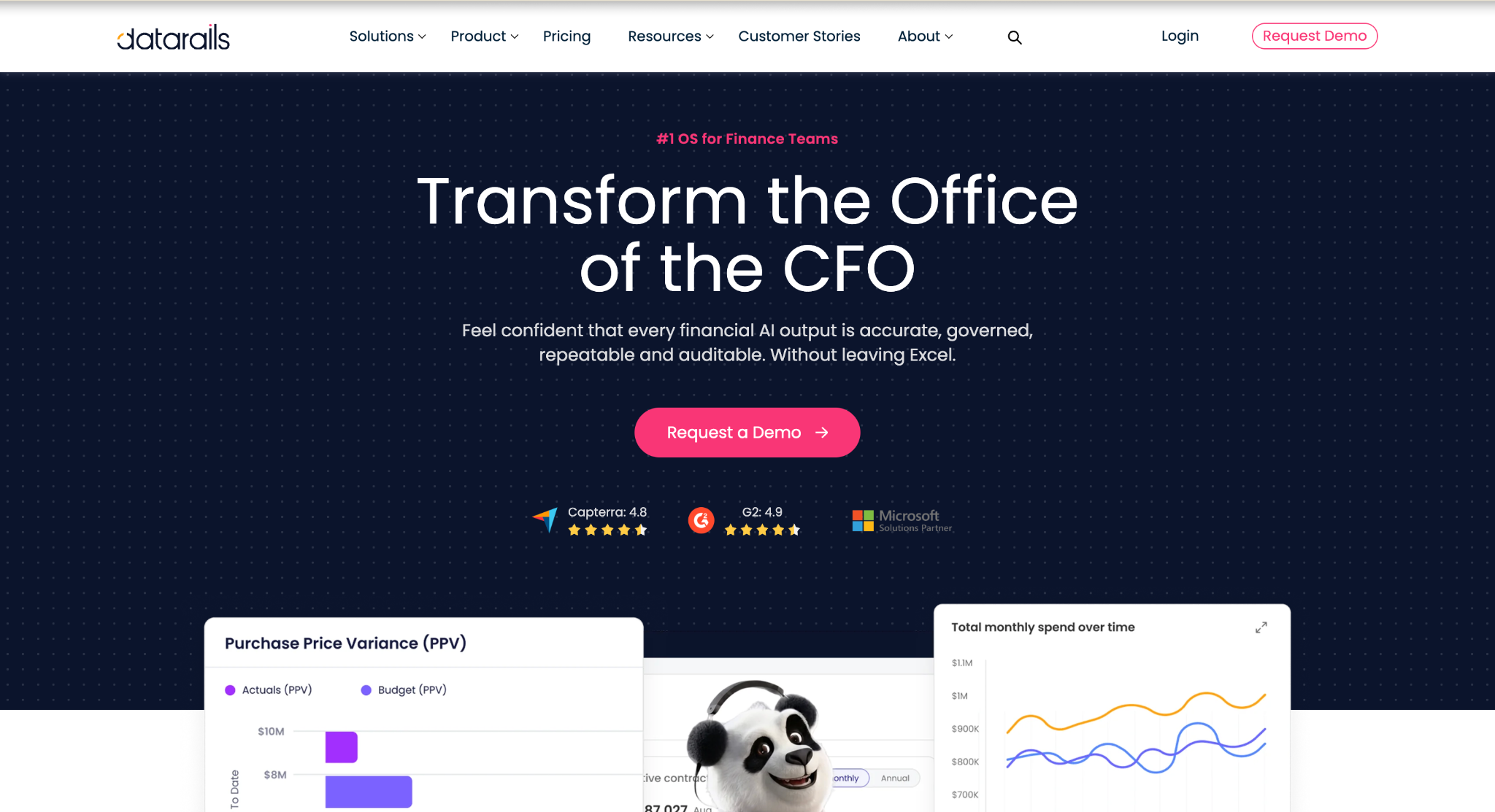
Datarails is an Excel-native FP&A platform that automates data consolidation and reporting while keeping spreadsheets as the working interface. Like Vena, it layers technology on top of Excel. For nonprofit finance teams who want to automate consolidation and reporting without abandoning their existing Excel models, Datarails offers a faster implementation path (30 to 90 days) and positions FP&A Genius, its generative AI assistant, as a differentiator for ad-hoc analysis and natural language querying.
The tradeoff for nonprofit buyers is that an Excel-native architecture retains the same formula maintenance, mapping table updates, and version-control overhead that can create friction for fund and program budgeting at scale.
If the primary reason for leaving Vena is to move off spreadsheet-dependent planning, Datarails does not solve that problem. If the goal is a less expensive or faster-to-deploy Excel-compatible system, it is a strong contender.
|
Strengths |
Limitations |
|
|
G2 Rating: 4.6/5
Pricing: Custom quote required. Not publicly available. Contact vendor for nonprofit-specific pricing.
Best for: Nonprofit finance teams with strong Excel expertise who want to automate consolidation and reporting without changing their working interface. Teams that want faster time-to-value than Vena but are not ready to leave spreadsheets entirely.
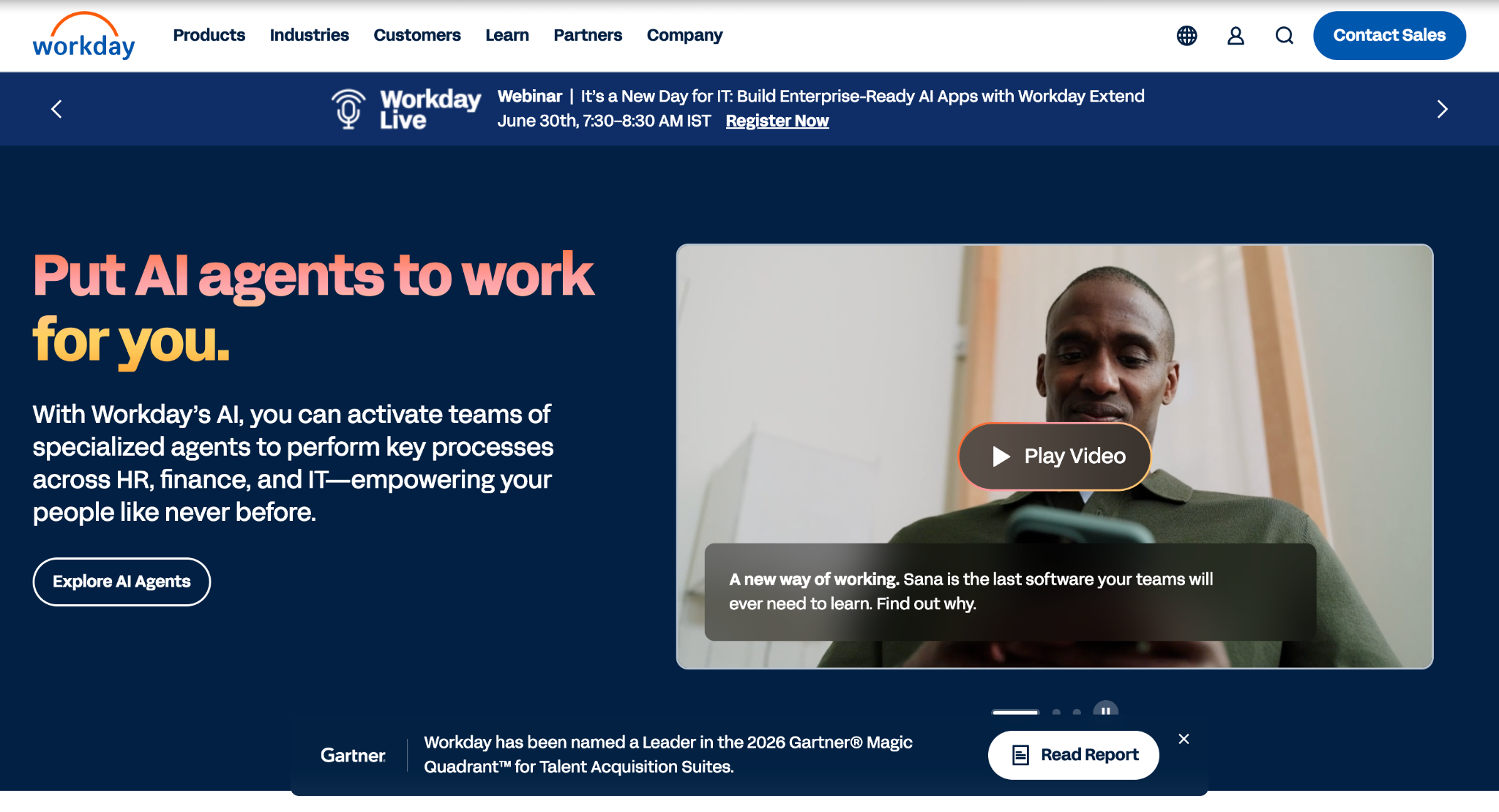
Workday Adaptive Planning is the financial planning module within the Workday ecosystem. For nonprofits already running Workday HCM or Workday Financials, the native integration eliminates the data pipeline effort that every other platform in this comparison requires. The AI layer (Illuminate) powers rolling forecasts, scenario modeling, and contextual guidance. For a pricing breakdown, see our guide to Workday Adaptive Planning pricing.
The critical caveat: Adaptive's strategic value drops significantly for nonprofits not already on Workday. Implementation runs 6 to 12 months, and year-one cost typically reaches well above the annual subscription when professional services are included.
|
Strengths |
Limitations |
|
|
G2 Rating: 4.3/5
Pricing: Estimated $20 to $40 per employee per year standalone (third-party marketplace data, July 2026). Implementation typically adds 100 to 150% of annual subscription in year one.
Best for: Nonprofits already invested in the Workday HCM or Financials ecosystem that want to unify workforce and financial planning data. If you are not on Workday, the implementation cost and timeline make this a difficult fit for most nonprofit budgets.
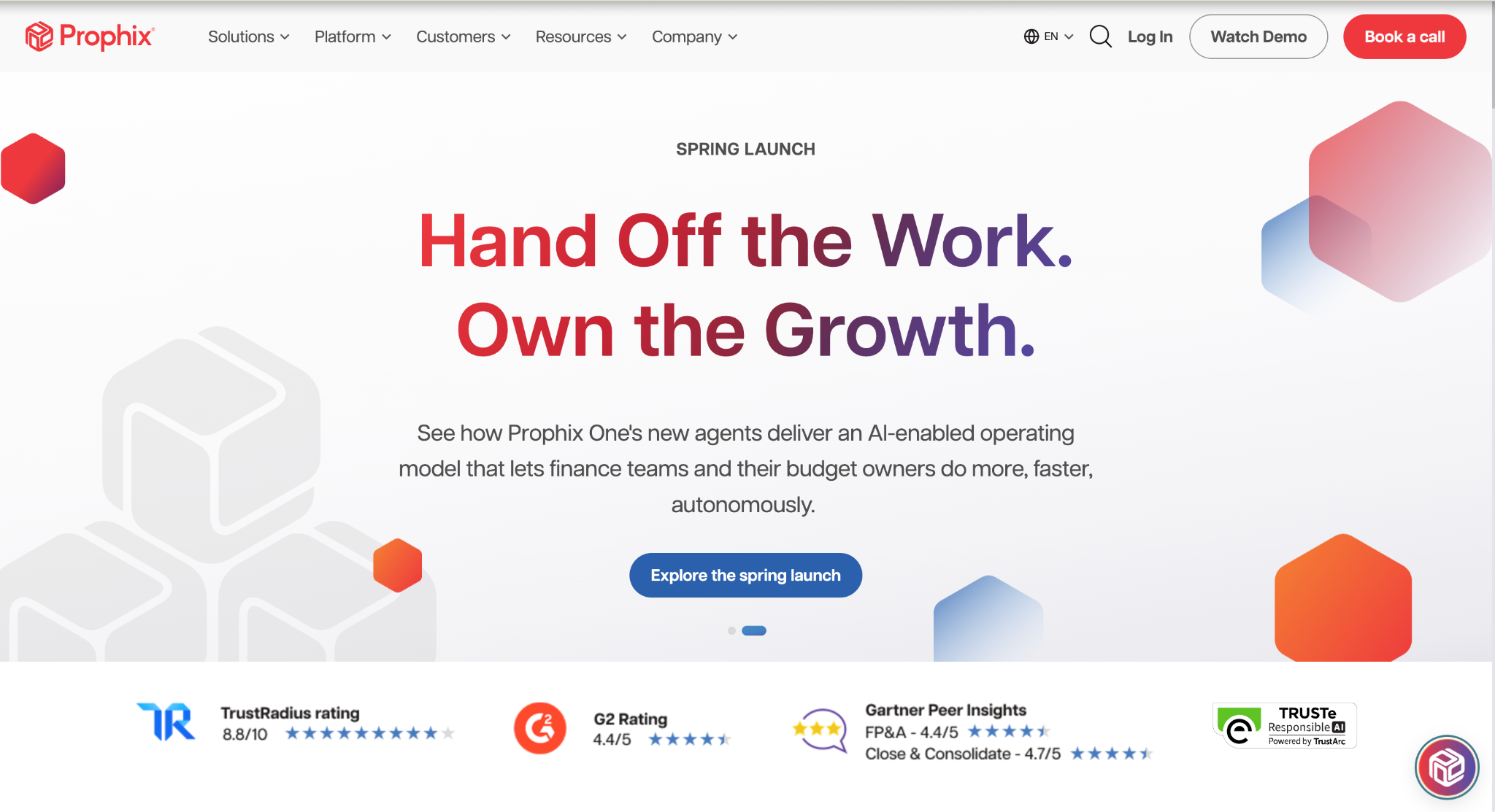
Prophix is a financial performance management platform covering budgeting, forecasting, consolidation, close management, and reporting. It serves over 3,000 customers globally and has notable nonprofit customers including Feeding America, Susan G. Komen, and Goodwill Industries. Prophix One, the cloud-based platform, includes AI-powered anomaly detection and automated data preparation.
Prophix fits large national nonprofits with significant employee counts, multi-entity structures, and the internal finance resources to manage an enterprise platform. Verified marketplace data indicates a minimum contract of approximately $50,000 per year, with an average reported deal of approximately $205,000 annually. That pricing puts it firmly in the enterprise tier.
|
Strengths |
Limitations |
|
|
G2 Rating: 4.4/5
Pricing: Not publicly available. Estimated minimum contract approximately $50,000/year; average reported deal approximately $205,000/year (third-party marketplace data, July 2026). Implementation and consulting additional.
Best for: Large national nonprofits with multi-entity structures, dedicated finance teams, and the internal resources to manage an enterprise-grade platform. Not a realistic fit for most mid-market nonprofit technology budgets.
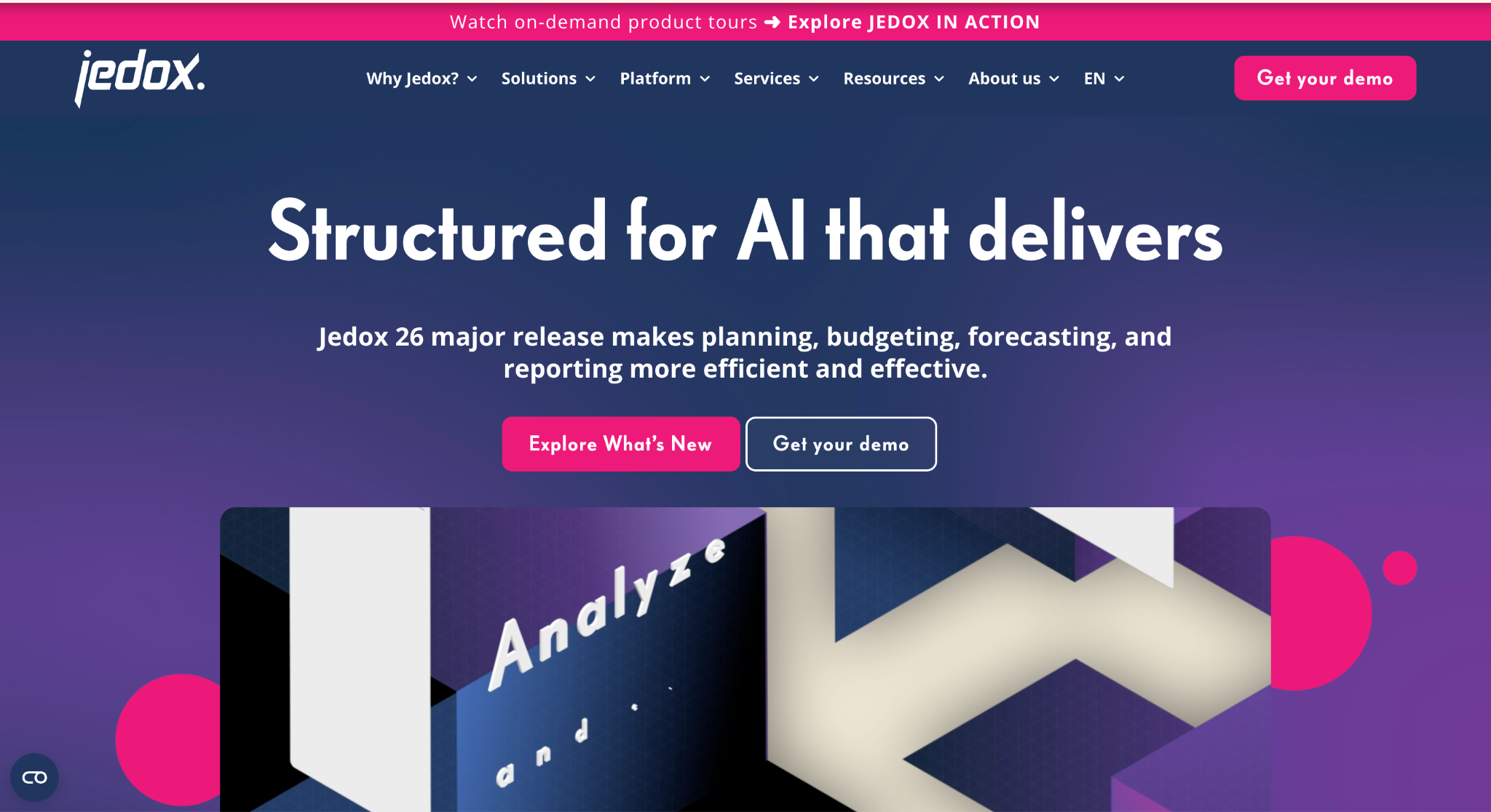
Jedox is an enterprise performance management platform built on OLAP cube technology. It serves over 2,800 organizations in 140 countries. The platform supports both cloud and on-premises deployment, which is relevant for nonprofits with specific data residency or security requirements.
Jedox's strength for nonprofits lies in its dimensional modeling flexibility. Organizations with complex multi-program structures, where costs need to be allocated across many programs with different funding sources and reporting requirements, can model those relationships in Jedox's cube-based architecture. The tradeoff is that building those models typically requires technical expertise or consultant support, and the platform's interface is less intuitive than purpose-built tools like Martus or cloud-native platforms like Limelight.
|
Strengths |
Limitations |
|
|
G2 Rating: 4.3/5
Pricing: Custom quote required. Subscription-based with tiers based on user roles and deployment. GetApp lists typical customers as nonprofits, public administrations, and mid-size to large enterprises.
Best for: Large nonprofits with complex, multi-program financial structures that require deep dimensional modeling. Organizations with internal technical resources or budget for implementation consultants. Not the right fit for lean nonprofit finance teams that need fast deployment.
Subscription price is not the cost of ownership. Here is the full picture for a nonprofit finance team evaluating these platforms against Vena.
|
Platform |
Entry price |
Year-one TCO estimate |
Tax fees |
Per-user fees |
Implementation time |
|---|---|---|---|---|---|
|
Vena |
Est. ~$30K/yr |
Higher with prof. services (per G2, ~20 mo to ROI) |
N/A |
Per-user |
2-5 months |
|
Limelight |
Published: $1,400/mo ($16,800/yr) |
Varies by scope (impl. included in onboarding) |
0% |
None. Flat-rate |
~2-12 weeks |
|
Martus |
Published: $6,000-$6,650/yr |
~$6,650-$10K (impl. included) |
N/A |
5-user packs |
~3 weeks |
|
Planful |
Est. $30K-$50K/yr |
Higher with services |
N/A |
Per-user |
3-6 months |
|
Datarails |
Custom quote |
Custom + support costs |
N/A |
Custom |
30-90 days |
|
Workday Adaptive |
Est. $20-40/employee/yr |
Est. 200-250% of sub. Y1 |
N/A |
Per-employee |
6-12 months |
|
Prophix |
Est. $50K+/yr (min) |
Est. $50K-$205K (avg deal) |
N/A |
Per-user by role |
8+ weeks |
|
Jedox |
Custom quote |
Custom + consultants |
N/A |
Per-user by role |
Varies |
For nonprofit finance teams with a $15K to $25K annual technology budget, the realistic shortlist narrows to Limelight and Martus. Planful and Prophix serve organizations with dedicated FP&A headcount and enterprise-scale budgets. Workday Adaptive makes sense only inside an existing Workday ecosystem.
Switching FP&A platforms involves more coordination than a typical software migration. Here is the practical framework for nonprofit finance teams considering a move.
Use this decision-flow table to narrow your shortlist based on your organization's primary need.
|
Your situation |
Shortlist |
|---|---|
|
You want to leave Excel-native FP&A for a cloud-native platform |
Limelight, Planful |
|
You need nonprofit-first budgeting workflows with fast implementation |
Martus Solutions |
|
You want to keep your existing Excel models and automate consolidation |
Datarails |
|
You need multi-entity financial consolidation at enterprise scale |
Planful, Prophix |
|
You are already running Workday HCM or Financials |
Workday Adaptive Planning |
|
You have complex, multi-program structures requiring deep dimensional modeling |
Jedox |
|
Your annual technology budget is under $25K and you need to move fast |
Limelight, Martus |
Book a demo to see how Limelight handles nonprofit FP&A
Vena has a dedicated not-for-profit offering with grant tracking templates and CRM integrations. It is well suited to finance teams with strong Excel expertise and a Microsoft 365 environment. Nonprofits with complex fund, program, and restriction dimensions may need significant configuration and professional services support to model those structures in Vena.
No. FP&A platforms import financial data from the accounting system (Sage Intacct, Blackbaud Financial Edge NXT, NetSuite, or similar) and use it for budgeting, forecasting, allocation modeling, and reporting. The accounting system maintains the general ledger and handles transaction-level fund accounting. The FP&A platform's value is in preserving those dimensions and using them for planning and analysis.
Among the platforms in this comparison, Limelight, Martus, Planful, Datarails, Prophix, and Jedox all list Sage Intacct integrations. Confirm the specific integration scope (objects, dimensions, data direction, and refresh frequency) with each vendor before committing. For more on how Limelight connects to Sage Intacct, see our guide to Limelight for Sage Intacct.
Ask each vendor for a written year-one total cost estimate that includes the subscription, implementation services, data migration, training, and any ongoing support fees. Compare those totals rather than headline subscription prices. Also ask about year-two pricing, as some platforms increase costs after the initial contract term.
FP&A platforms that support dimensional modeling (Limelight, Planful, Jedox, and to a degree Martus) can model functional expense allocation across program, management and general, and fundraising categories. The platform produces the allocation model and reporting output. The accounting system supplies the transaction data. Whether the output is audit-ready depends on the allocation method, data quality, and how well the dimensional structure maps to the accounting system's chart of accounts.
Subscribe to our newsletter
-1.png)