
%20(1).svg)
8 CFO Board Report Templates and Best Practices for 2026
By Laks Satchi |
Last Updated: August 06, 2026
Board reporting breaks down when directors must reconstruct the financial story from disconnected tables. A CFO board report should tell them what changed, why it changed, what management expects next, and which decisions require board input. The issue is part of a wider finance-transformation agenda.
In Deloitte's Q4 2025 CFO Signals survey of 200 North American CFOs at companies with at least $1 billion in annual revenue, 50% named digital transformation of finance as a top 2026 priority, while 49% prioritized automation that frees employees for higher-value work.
This guide covers the structure, templates, workflow, presentation practices, and software options behind clearer board reporting.
A CFO board report is the finance section of the materials prepared for a company's board of directors. It combines current financial results, material budget and forecast variances, liquidity, operational KPIs, risks, and recommendations in a format that supports oversight and decision-making.
The CFO report is one part of the broader board pack, also called a board book. The full pack may include legal, governance, committee, strategy, and operating materials. The CFO report should remain focused on the financial story and the decisions that follow from it. Effective board-ready reporting also keeps the narrative connected to the underlying data so directors can move from the headline to supporting detail without losing context.
The exact mix depends on the company's stage, industry, board mandate, and current risks. Most reports still need five core elements. Each one should answer a different board-level question.
Start with the period's headline result, the most material changes, the updated outlook, and the decisions or approvals required from the board. The executive summary should work as a standalone briefing, not as a table of contents for the pages that follow.
A strong opening answers four questions:
Provide condensed views of the income statement, balance sheet, and cash flow statement. The board needs enough detail to evaluate profitability, working capital, debt, cash availability, and covenant or runway risk. Granular account schedules usually belong in the appendix.
Show comparisons that matter to the current discussion, such as:
Select the financial and operating metrics that connect most directly to strategy. Revenue growth, gross margin, cash conversion, customer retention, utilization, headcount, and capital efficiency may all matter, but the report should not include every metric the company tracks.
For each material gap, add a short explanation of the driver, expected duration, and management response. Budget variance analysis is useful only when it moves beyond the arithmetic and explains what created the difference.
Show the current outlook beside the prior forecast so directors can see what moved. Document the assumptions behind the change, then connect the forecast to the risks that could still alter it.
A board-level forecast should make clear:
The forecasting process should therefore feed the board report rather than operate as a separate finance exercise.
Tie financial results to board-approved initiatives, such as a market launch, acquisition integration, restructuring program, systems implementation, or capital project. Report progress, spend, milestones, expected value, and any decision that has changed since approval.
Use appendices for detailed schedules, reconciliations, KPI definitions, assumptions, and source notes. The main report should contain what directors need to understand the situation and make the next decision.
The cost of manual reporting is not limited to the hours spent formatting slides. The larger problem is that each handoff between systems, spreadsheets, and reviewers creates another opportunity for the numbers and the narrative to separate.
Automation can remove repeatable work such as data consolidation, refreshes, formatting, and report-book generation. It cannot decide which variance is material, whether management's explanation is credible, or what the board should do next.
Templates create consistency without forcing every meeting into the same story. The best approach is to keep the layout stable, then change the emphasis based on performance, risk, and the decisions on the agenda.
Purpose: Give directors a one-page view of performance, outlook, risks, and required decisions.
Include:
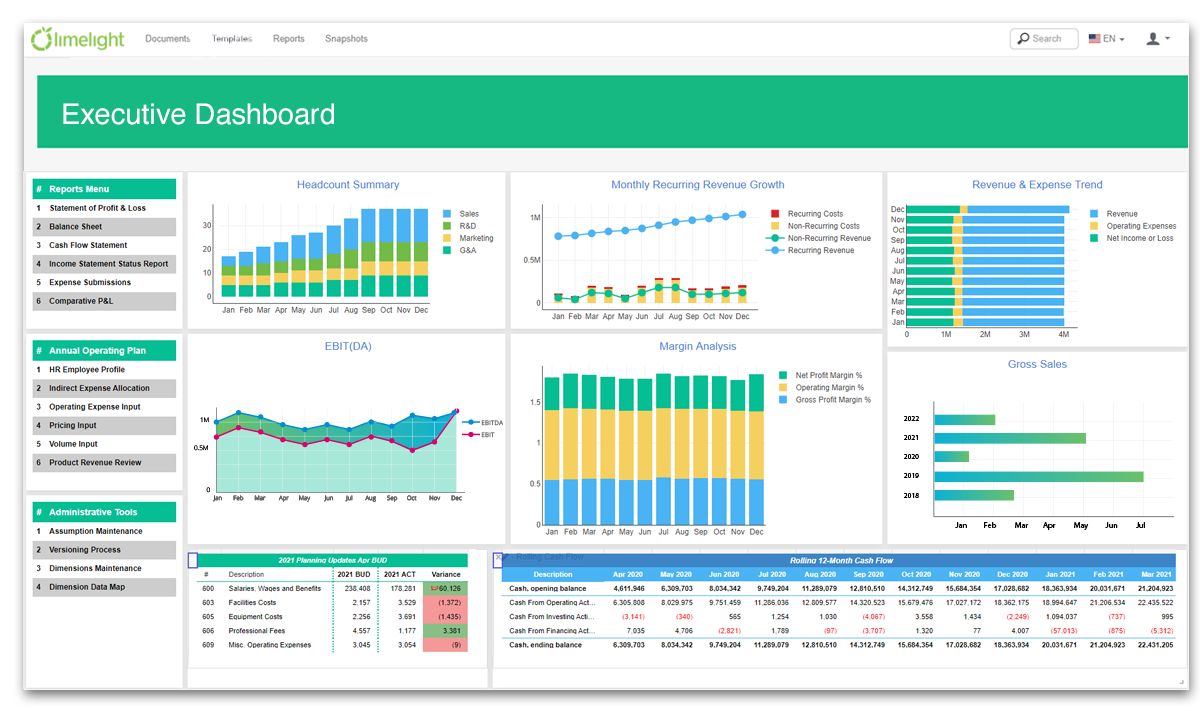
Executive summary dashboard with revenue, headcount, margin, and expense views
Purpose: Condense the income statement, balance sheet, and cash flow statement into a board-level view.
Include:
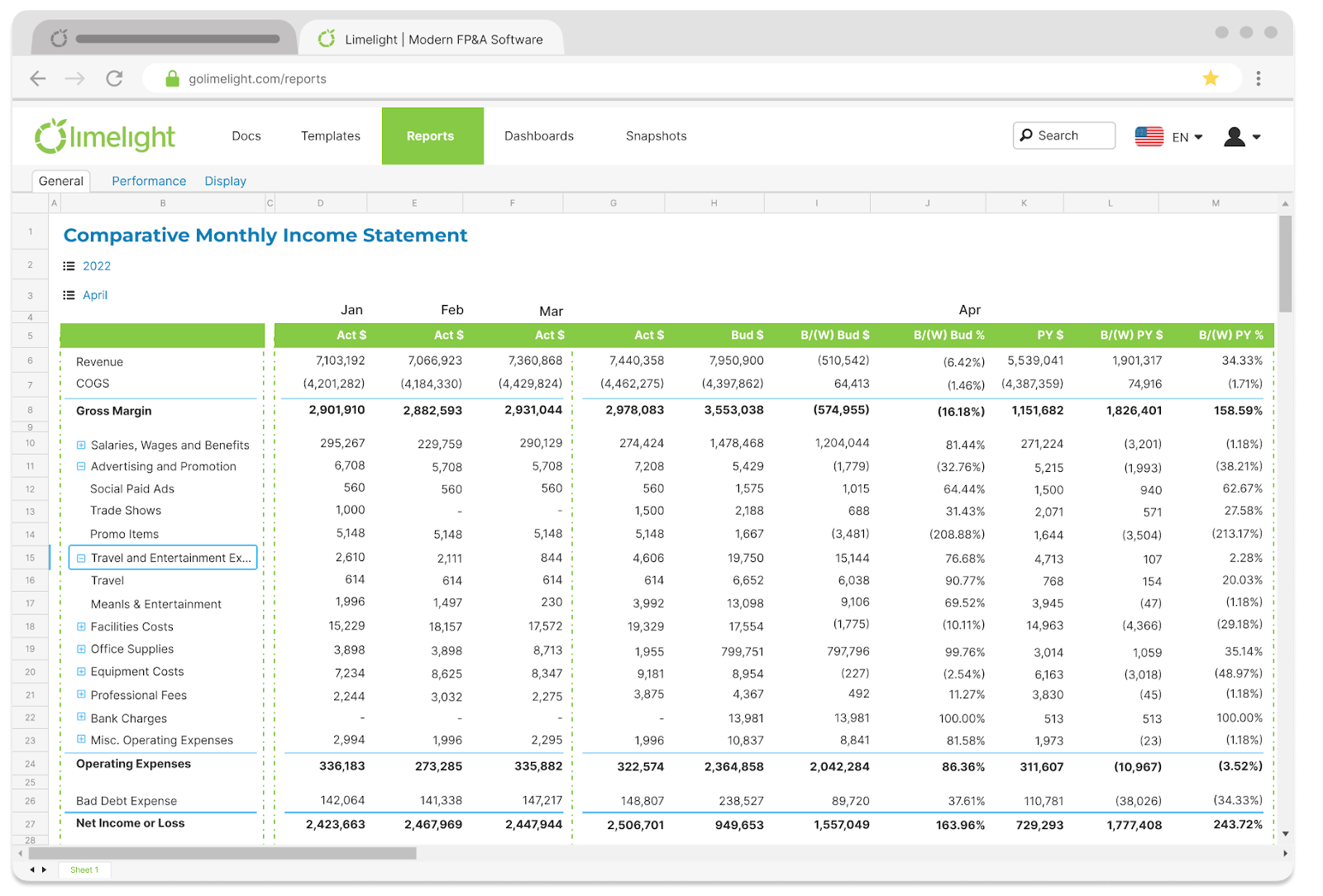
Comparative monthly income statement used for board reporting
Purpose: Show where results departed from the plan and explain the business drivers behind the largest differences.
Include:
Finance teams can use Limelight's budget-versus-actual Excel template as a starting structure. The template should still be adapted to the board's materiality rules and the company's operating model.
Purpose: Show the board where the company is now expected to finish, not where the annual budget assumed it would finish.
A rolling forecast extends the planning horizon as each period closes. The board view should compare the latest forecast with the prior forecast and explain the assumptions that changed.
Include:
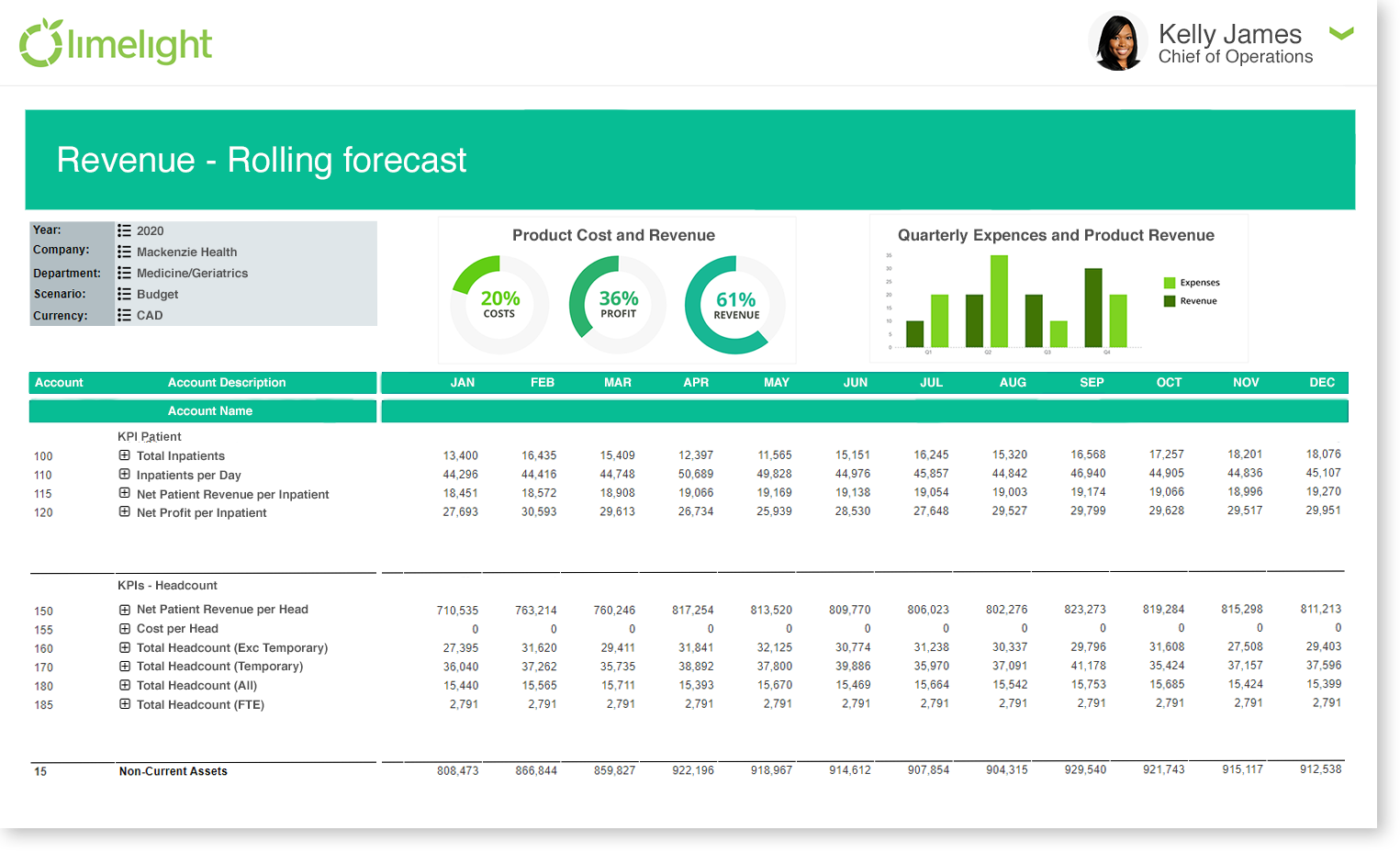
Rolling forecast template
Purpose: Connect financial outcomes to the operating drivers management can influence.
Include:
The right metrics depend on the business model. A SaaS board may focus on annual recurring revenue, net revenue retention, gross margin, and cash burn. A manufacturer may place more weight on volume, yield, backlog, inventory turns, and plant utilization.
Purpose: Give the board an early view of liquidity pressure, financing needs, and the timing of major cash movements.
Include:
A short-term cash flow forecast may use a 13-week horizon, while the board pack may also carry a longer monthly view for strategic planning.
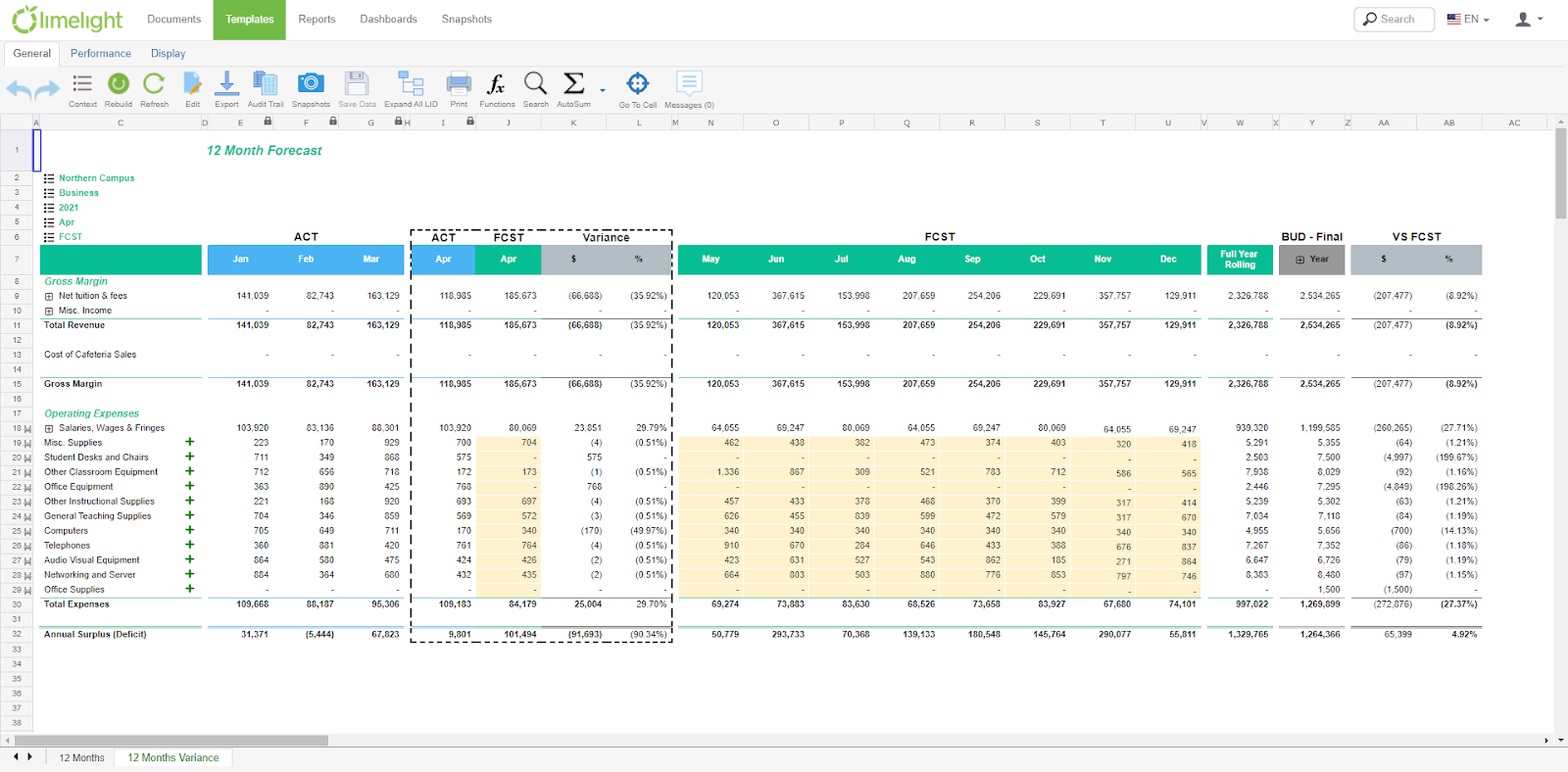
Cash flow forecast with monthly inflows, outflows, and balances
Purpose: Track whether board-approved investments remain on budget, on schedule, and tied to the expected business outcome.
Include:
For uncertain investments, connect the tracker to scenario planning so directors can see how different cost, timing, or demand assumptions affect the expected return.
Purpose: Connect workforce decisions to cost, capacity, and strategic execution.
Include:
A disciplined headcount-planning process helps the board distinguish planned investment from unplanned cost growth.
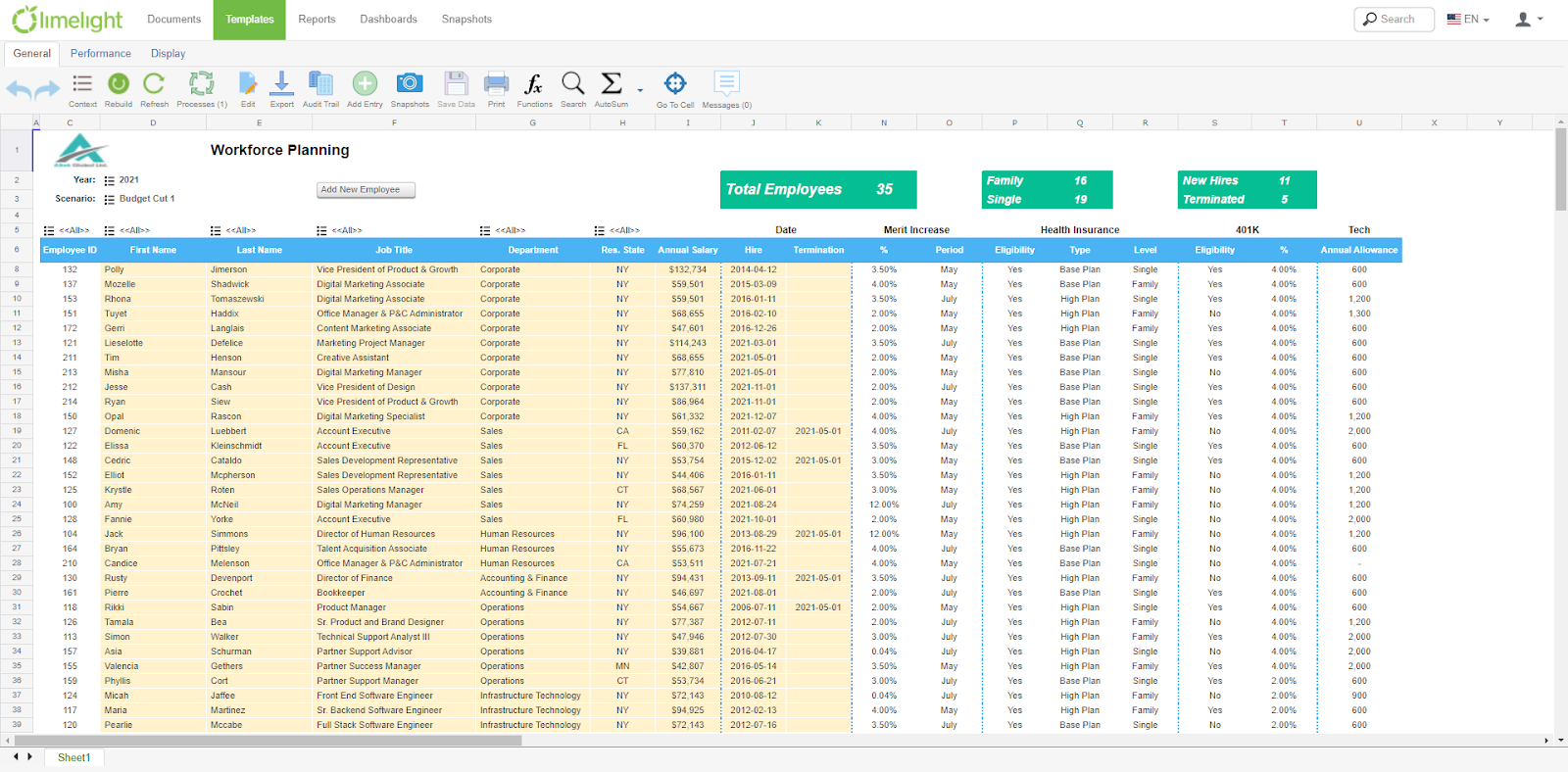
Workforce planning report with employee-level cost and headcount data
A repeatable workflow reduces last-minute changes and gives finance more time to test the story behind the numbers. The process should follow the company's close calendar, governance rules, and board-distribution schedule.
A technically correct report can still lead to a weak meeting. Presentation quality depends on how quickly directors can identify the issue, understand the cause, and see what management recommends.
Do not make directors search through ten pages before finding the question management wants answered. Put decisions, exceptions, and changes from the prior meeting near the front. Routine performance can follow in the standard sections.
Use the same page order, metric definitions, visual conventions, and comparison periods from meeting to meeting. Stability helps directors spot change faster because they do not need to relearn the report.
Change the structure only when the board's information needs to change. A redesign should solve a clear problem, not serve as a quarterly formatting exercise.
Define which dollar, percentage, operational, or risk movements require written commentary. A small percentage variance can still be material when it affects liquidity, a covenant, regulatory exposure, or a strategic milestone.
Materiality should reflect the board's oversight responsibilities. It should not be used to hide unfavorable movement that falls just below a numerical cutoff.
The main report should carry the financial story, forecast changes, risks, and recommendations. Detailed ledgers, account schedules, KPI definitions, and supporting reconciliations belong in the appendix.
Use narrative reporting to keep commentary, charts, and supporting material connected. Directors should be able to inspect the evidence without losing the thread of the discussion.
A complete variance explanation covers four points: what moved, what caused it, whether the effect will continue, and what management is doing about it. That structure prevents commentary from becoming a defensive description of past performance.
Use the same discipline for favorable variances. Outperformance may come from timing, deferred spending, one-time revenue, or an assumption that will reverse later.
Review the report as a director would. Test whether each headline metric has a clear drill path, whether forecast assumptions are documented, and whether management can reconcile alternative figures used elsewhere in the pack.
The goal is not to predict every question. It is to make sure the team can move from summary to source without starting another manual reporting cycle during the meeting.
Most reporting failures are structural rather than visual. They occur when the pack contains the right data but does not help the board understand or act on it.
Software selection should follow the reporting workflow, not the other way around. Evaluate how each platform connects source data, preserves financial ownership, handles narrative, supports drill-down, controls versions, and distributes board materials.
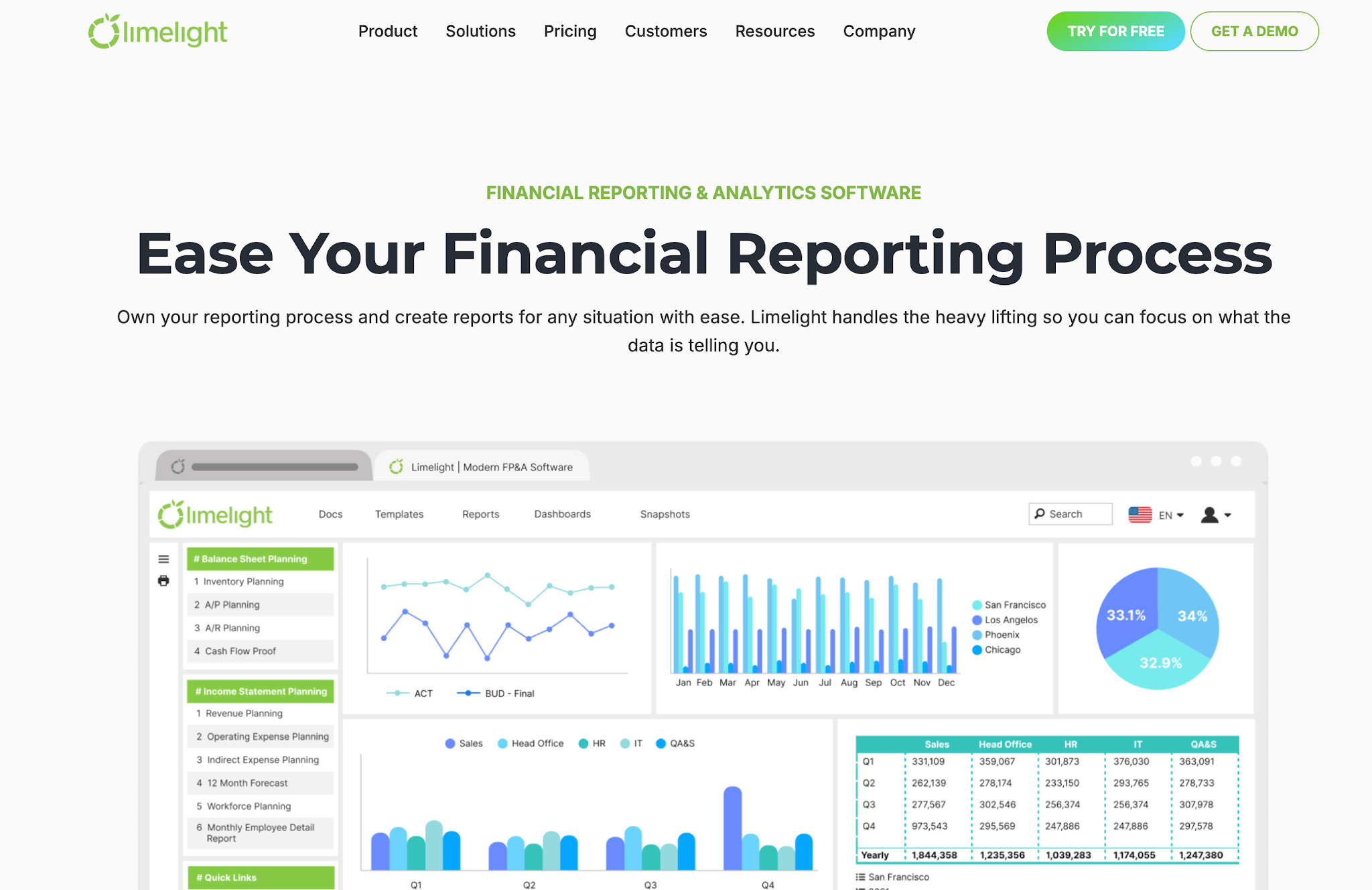
Limelight reporting page with financial dashboards and board-reporting visuals
Limelight is a cloud FP&A platform for budgeting, forecasting, reporting, modeling, and analysis. Its reporting workflow combines connected actuals, formatted reports, dashboards, variance explanations, attachments, and report-book generation.
Board-reporting strengths:
Pricing: Limelight starts at $1,400 per month, according to its June 2026 pricing guide. Final pricing varies with user count, integrations, implementation, and training.
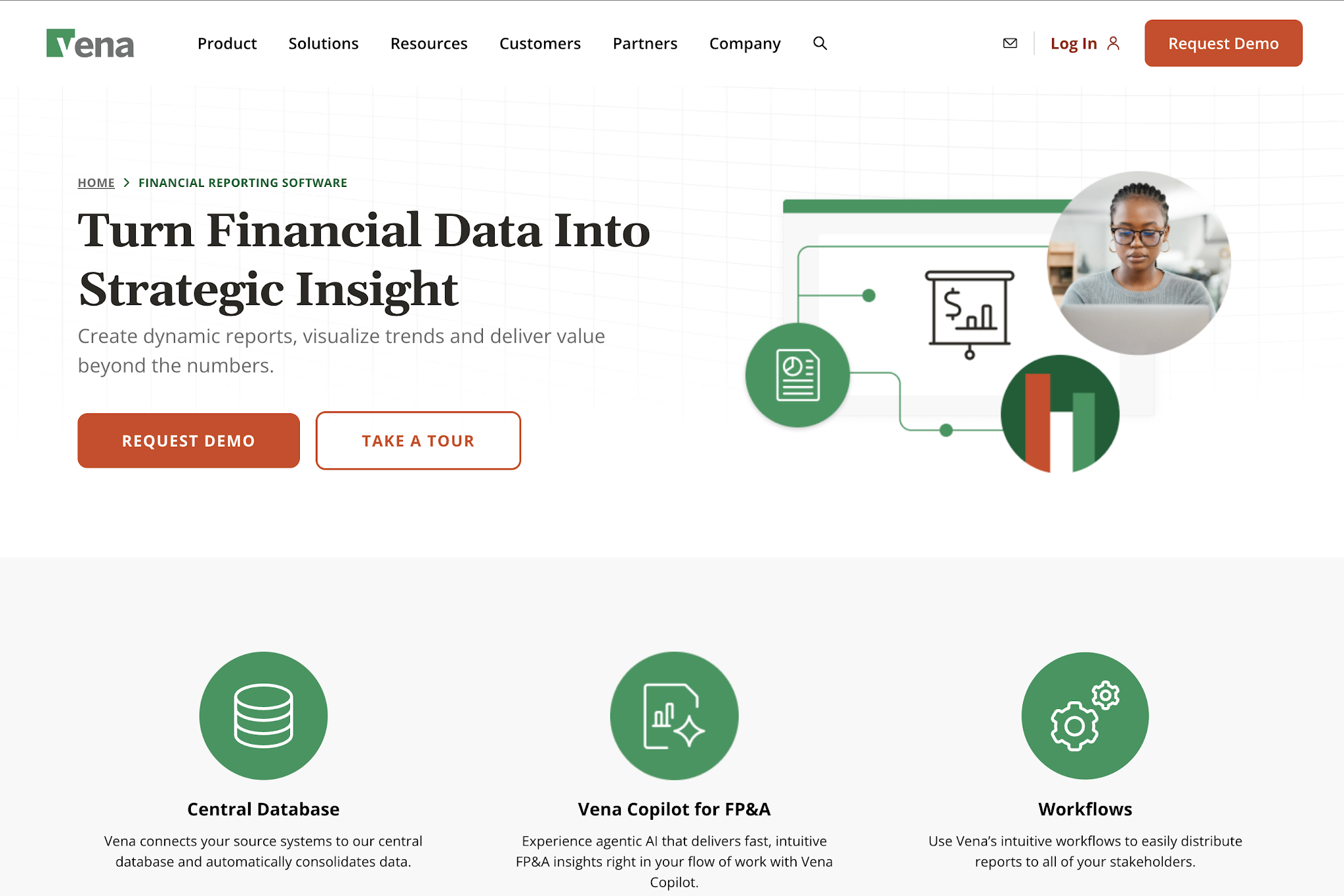
Vena financial reporting page with database, workflow, and reporting features
Vena's financial reporting software uses Microsoft Excel as the front end to a central database. It supports pre-built reporting templates, workflow controls, scheduled distribution, and general-ledger integrations.
Board-reporting strengths:
Pricing: Vena does not publish dollar amounts. Its official pricing page uses two quote-based plans, Professional and Complete. Some capabilities are included in Complete or are available at an additional cost with Professional.
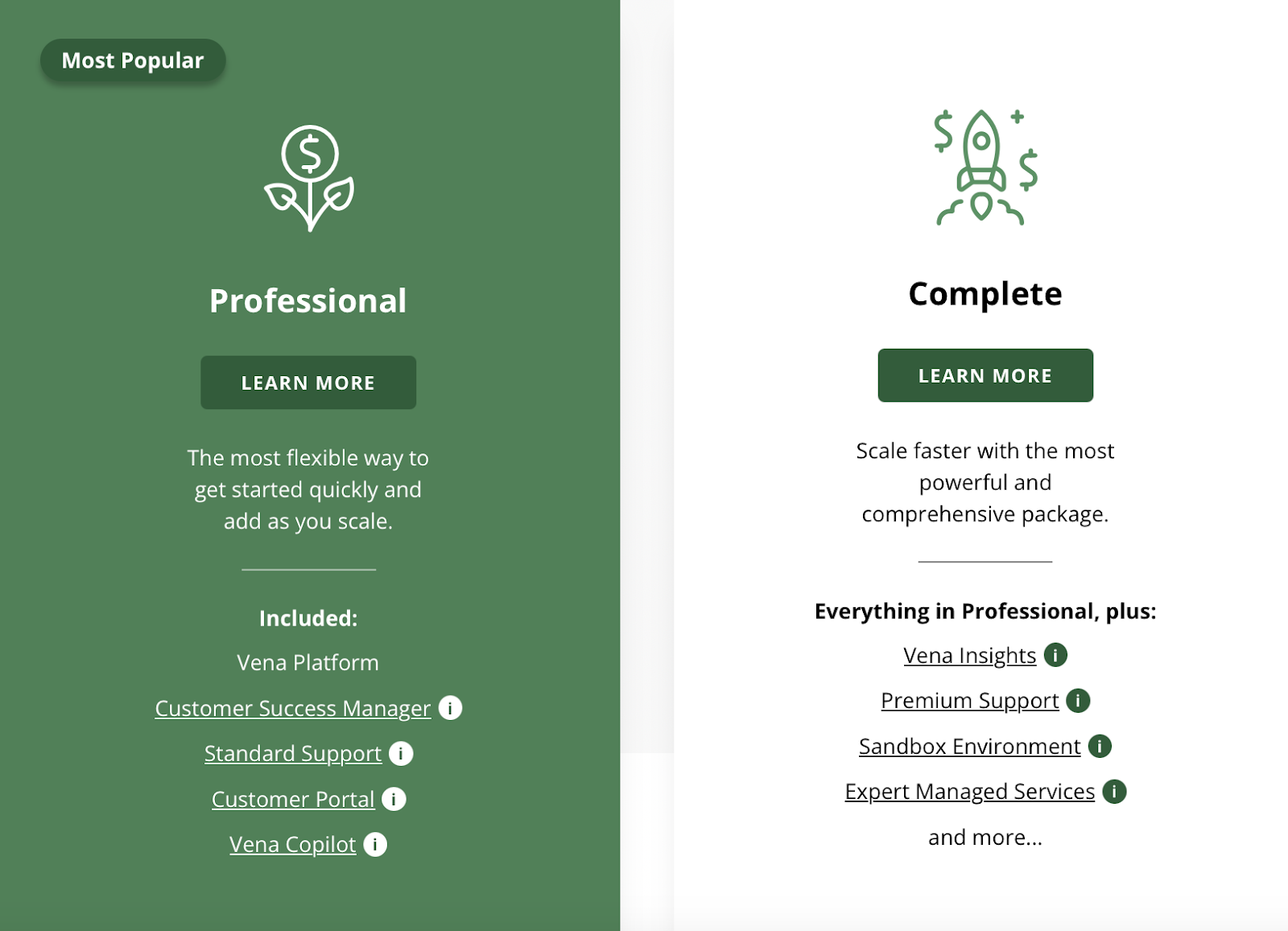
Finance teams comparing spreadsheet dependence, modeling ownership, and implementation approach can review Limelight versus Vena.
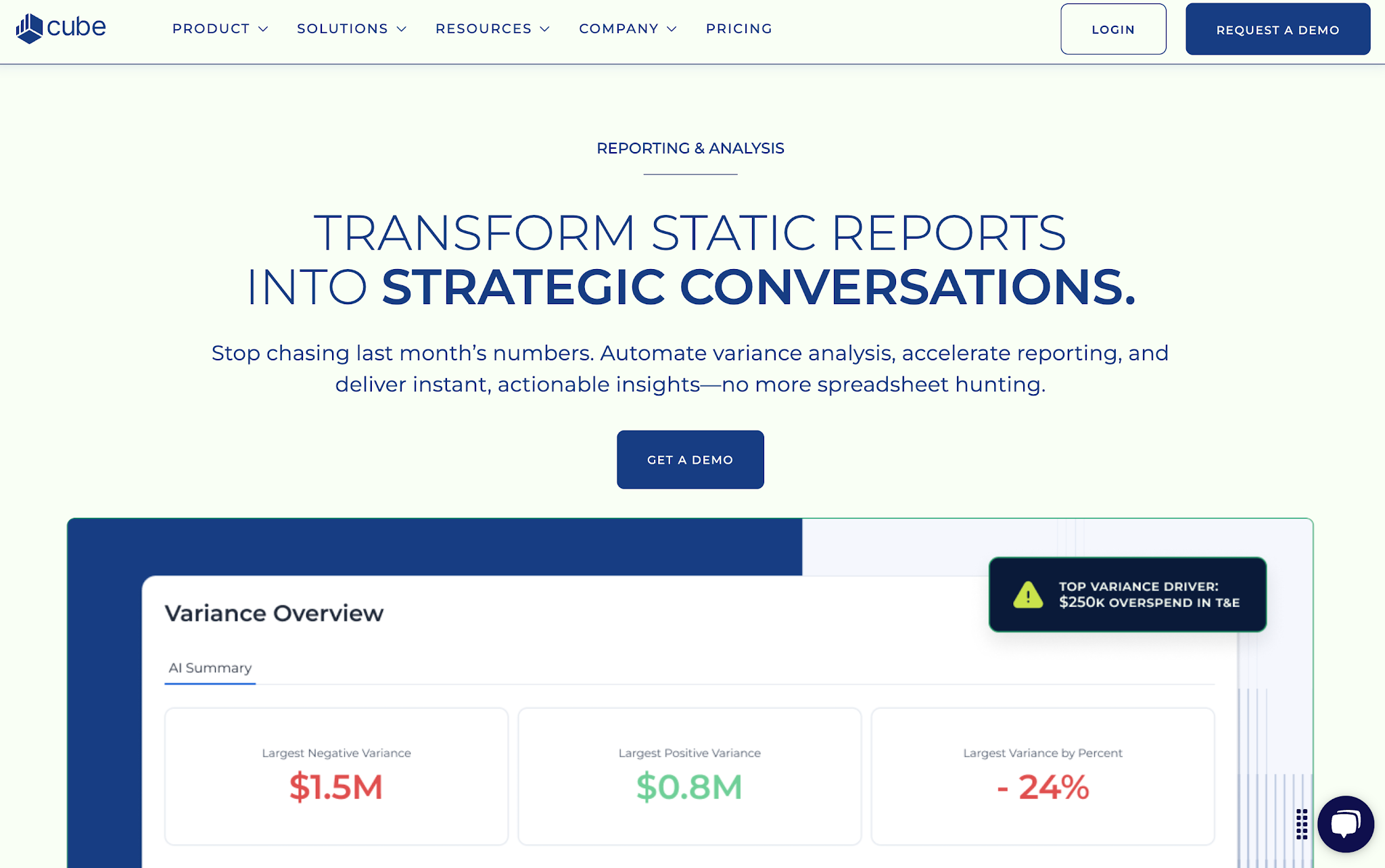
Cube reporting and analysis page with variance and management-reporting features
Cube's reporting and analysis platform works through Excel and Google Sheets while centralizing finance data. Its reporting features cover variance analysis, ad hoc analysis, management reporting, and financial statements.
Board-reporting strengths:
Pricing: Cube uses custom quotes for its Bronze, Silver, and Gold plans. Premium Support+, additional modules, and API access are configurable add-ons.
The Limelight versus Cube comparison focuses on interface, data refresh, modeling, and spreadsheet dependence.
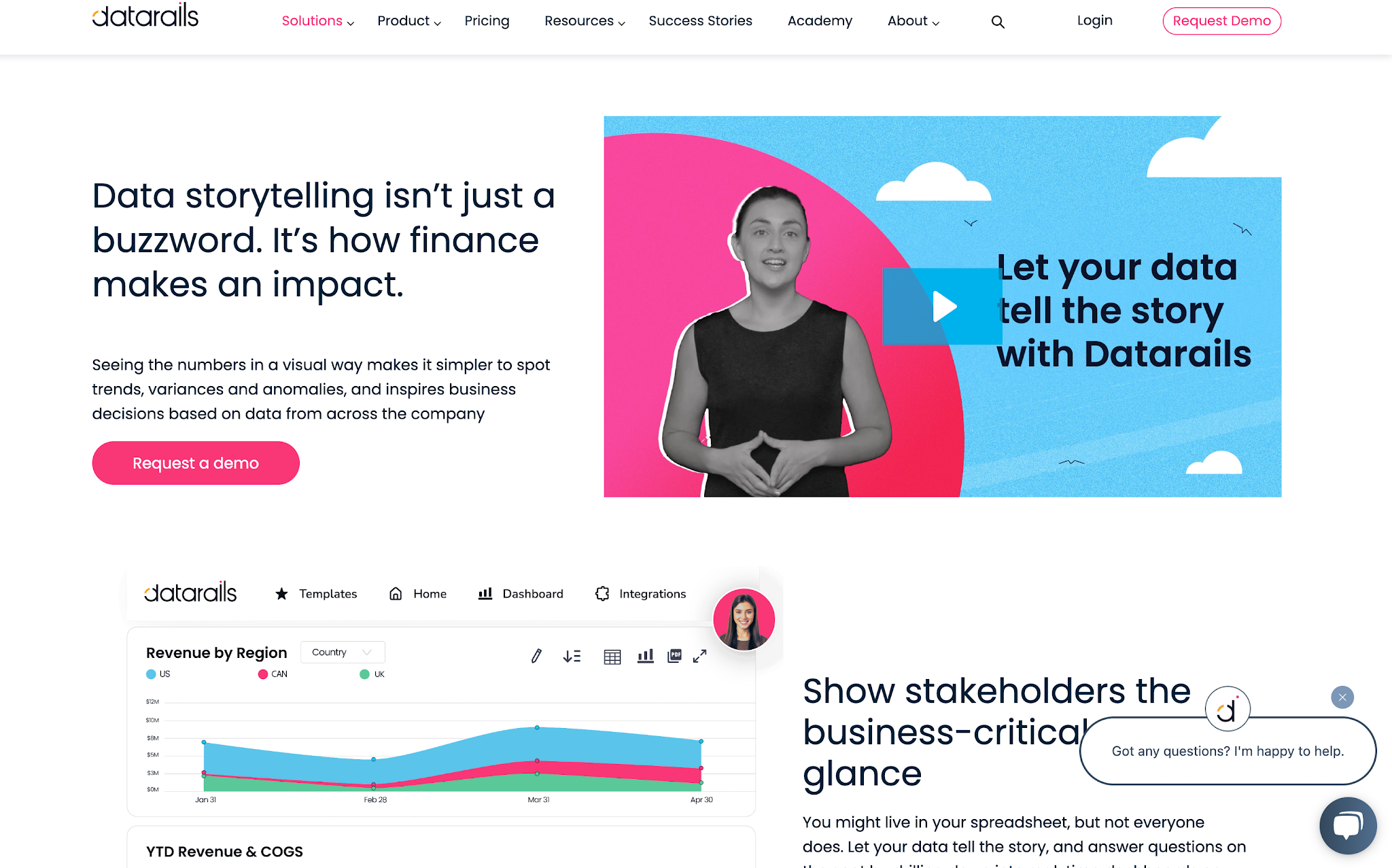
Datarails visualization page with dashboards and finance storytelling features
Datarails' data-visualization platform extends Excel-based finance workflows with automated refreshes, dashboards, drilldowns, and board-ready PowerPoint output.
Board-reporting strengths:
Pricing: Datarails uses custom quote-based pricing. Professional includes 2 users and 1 integration, Premium includes 5 users and 2 integrations, and Expert includes 15 users and 3 integrations. Quotes vary by use case, user count, and integrations.
The Limelight versus Datarails page compares their approaches to Excel, modeling, collaboration, and reporting.
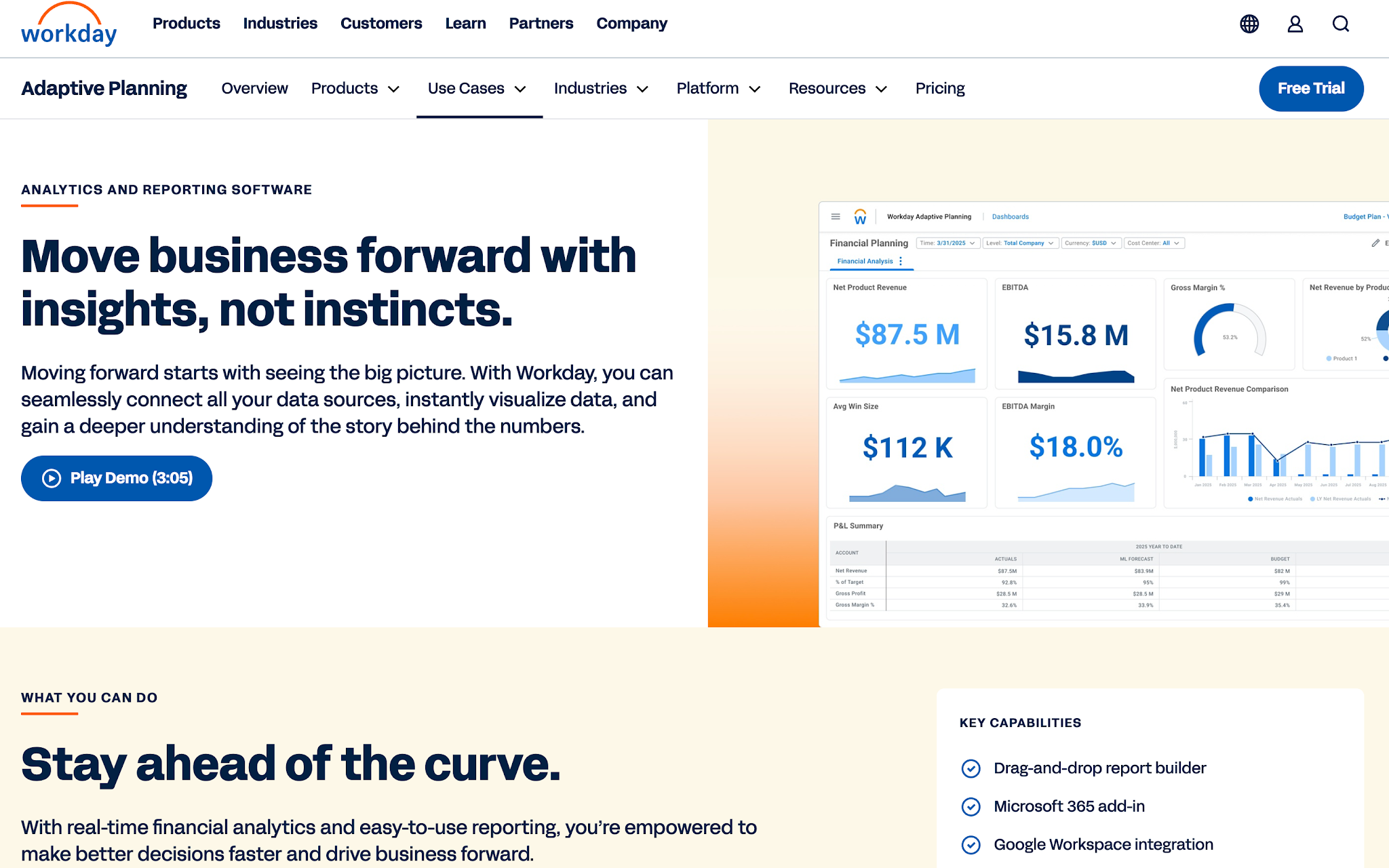
Workday Adaptive Planning analytics and reporting page
Workday Adaptive Planning analytics and reporting support financial reports, interactive visualizations, scenario analysis, and Microsoft 365 and Google Workspace connections.
Board-reporting strengths:
Pricing: Workday states that Adaptive Planning pricing varies and requires a quote. It offers a free 30-day trial, while Adaptive Planning Close & Consolidation is packaged separately.
The Limelight versus Workday Adaptive page compares implementation, reporting, modeling, and platform administration.
|
Platform |
Published pricing |
Workflow fit |
Spreadsheet approach |
Board-reporting strengths |
Evaluation focus |
|
Limelight |
Starts at $1,400/month; final quote varies |
Finance teams seeking connected FP&A and live reporting |
Excel-like cloud interface without requiring Excel files |
Auto-updated reports, narrative context, report books, and drillthrough |
Confirm integration scope, report design, and implementation plan |
|
Vena |
Custom quote; Professional and Complete plans |
Teams committed to Microsoft Excel workflows |
Excel front end connected to a central database |
Templates, workflows, approvals, and scheduled distribution |
Determine whether Excel dependence fits governance and maintenance needs |
|
Cube |
Custom quote; Bronze, Silver, and Gold plans |
Teams that want centralized data inside Excel or Google Sheets |
Spreadsheet add-in model |
Variance analysis, ad hoc reporting, and management reports |
Test model complexity, refresh performance, and distribution requirements |
|
Datarails |
Custom quote; Professional, Premium, and Expert plans |
Excel-based teams prioritizing dashboards and presentations |
Excel add-in model |
Automated dashboards, drilldowns, and PowerPoint output |
Test add-in governance, collaboration, and version control |
|
Workday Adaptive Planning |
Pricing varies; quote required; 30-day free trial |
Organizations evaluating broader planning and reporting |
Office-connected reporting through Microsoft 365 |
Report builder, visualizations, scenarios, and ad hoc analysis |
Assess administration, ecosystem fit, and reporting ownership |
Table: The five platforms differ in spreadsheet dependence, reporting workflow, plan structure, and pricing transparency.
Limelight addresses the repetitive parts of board-report preparation while keeping finance responsible for the story. The practical value comes from connecting source data, formatted reports, narrative, and supporting detail inside one reporting workflow.
Limelight's integrations connect finance data from systems including Sage Intacct, Microsoft Dynamics, NetSuite, and other ERPs. Connected actuals can refresh reports without repeated exports and copy-and-paste updates.
That reduces the risk of one page reflecting a newer closed version than another. Finance still needs reconciliation controls, but the report no longer depends on manually updating every table and chart.
Comments, variance explanations, attachments, charts, and supporting files can sit beside the financial results they explain. This keeps the board narrative tied to the source view instead of separating commentary into a slide deck that may be updated on a different schedule.
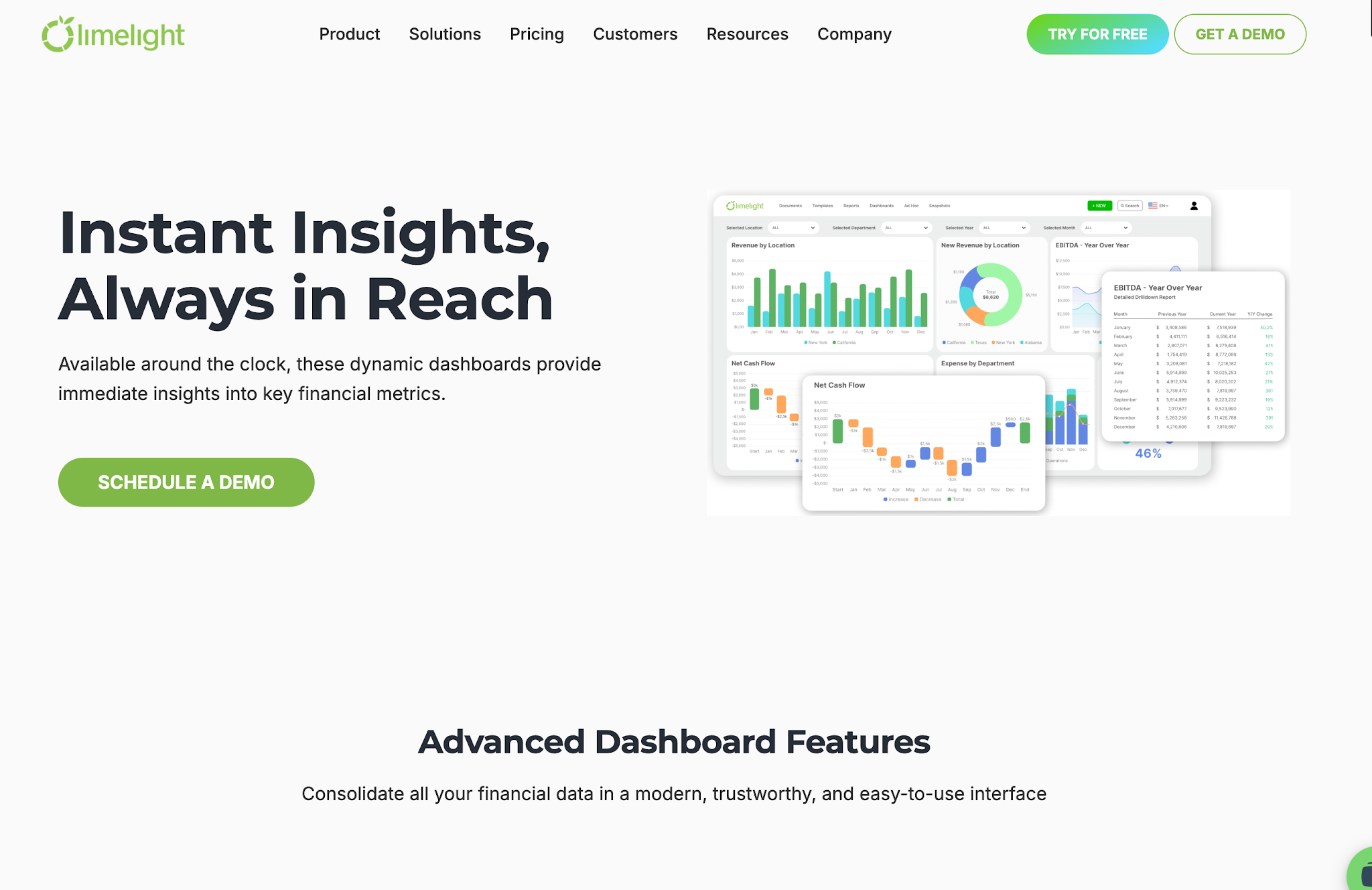
Limelight dashboard with charts, KPIs, and financial reporting views
Interactive dashboards and formatted reports let finance move from a top-level KPI to account, department, business unit, or transaction detail. This matters during board preparation and follow-up because the team can investigate a question without rebuilding the report in another file.
Limelight AI can generate variance explanations, highlight trends, detect anomalies, and answer contextual questions from financial reports. Finance should treat the output as a first analytical pass. The CFO still owns the final explanation, the materiality judgment, and the recommendation presented to the board.
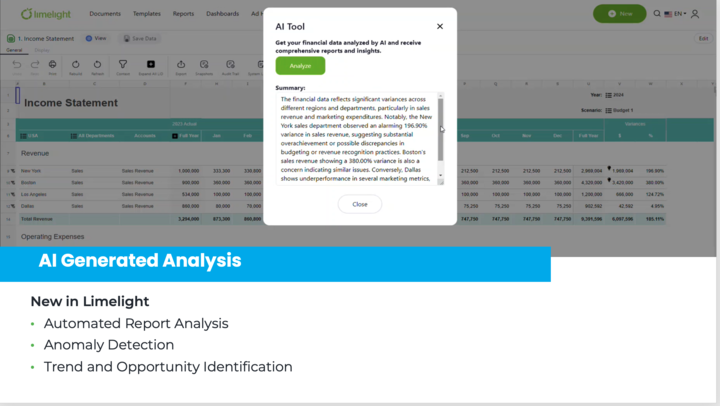
Limelight AI generating financial report analysis and variance commentary
Book a Limelight demo to review how connected reporting, narrative, drill-down, and automated analysis would fit your board-reporting process.
The CFO should remain accountable for the report's accuracy, interpretation, and recommendations. FP&A, controllership, treasury, operations, and business leaders may prepare individual sections, but finance needs one owner for the final narrative, version, and distribution.
Use the timetable set by the board's governance process. The report should reach directors early enough for a considered review, while still containing reconciled and current information. If the close calendar makes that difficult, agree on a fixed cutoff and label any later updates clearly.
Place detailed financial statements, account schedules, KPI definitions, reconciliations, model assumptions, supporting project detail, and source notes in the appendix. Keep any item in the main report when directors need it to understand a material issue or make a decision.
Combine quantitative and qualitative thresholds. Dollar and percentage cutoffs help identify routine variances, but liquidity, covenant, compliance, reputation, customer concentration, and strategic-milestone risks may be material even when the financial amount is small.
A management report usually contains more operational detail and supports day-to-day control. A board report is more selective. It focuses on oversight, strategy, material risk, forecast changes, capital allocation, and decisions reserved for the board.
Yes. Finance can automate data consolidation, refreshes, calculations, formatting, report-book generation, and distribution. The CFO and finance team should retain control over metric selection, materiality, explanations, risk framing, and recommendations.
Subscribe to our newsletter